

Mark D. Tyson, II, MD, MPH, highlights interim findings from the ADVANCED-2 trial of TARA-002 in BCG-naïve NMIBC.
Mark D. Tyson, II, MD, MPH, highlights interim findings from the ADVANCED-2 trial of TARA-002 in BCG-naïve NMIBC.

The study retrospectively analyzed 456 biopsy-naive men who underwent PHI testing followed by a prostate biopsy.
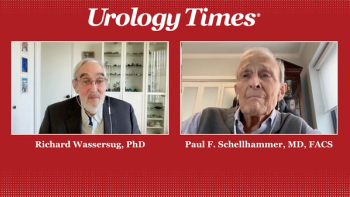
In the final installment in a 5-part series, Richard Wassersug, PhD, and Paul F. Schellhammer, MD, FACS, discuss strategies for establishing transdermal estradiol as a recognized therapy for men undergoing androgen deprivation therapy for prostate cancer.
In part 4 of a 5-part series, Richard Wassersug, PhD, and Paul F. Schellhammer, MD, FACS, focus on concerns about the adverse events of transdermal estradiol, particularly gynecomastia.
In part 3 of a 5-part series, Richard Wassersug, PhD, and Paul F. Schellhammer, MD, FACS, discuss emerging evidence supporting transdermal estradiol as an effective and potentially superior alternative to traditional LHRH analogue ADT for advanced prostate cancer.
In part 2 of a 5-part series, Richard Wassersug, PhD, and Paul F. Schellhammer, MD, FACS, explore the historical, clinical, and systemic barriers to using transdermal estradiol as a treatment for prostate cancer, while highlighting its potential benefits.
In this opening segment, Richard Wassersug, PhD, and Paul F. Schellhammer, MD, FACS, discuss the origins, goals, and challenges of the Estradiol Initiative.

Harras Zaid, MD, discusses the complex decision-making involved in managing renal tumors with associated tumor thrombus.

Tom Jayram, MD, discusses the phase 2 SURF302 trial of TYRA-300, a FGFR3-selective inhibitor for FGFR3-altered LG-IR-NMIBC.

Fed Ghali, MD, highlights simulated outcomes of the EV-302 trial when adjusting for use of maintenance avelumab in the control arm.
One of the most notable changes is a new thematic structure within urologic oncology.
The study assessed descriptive sequencing and oncologic outcomes among patients receiving gene therapy for BCG-unresponsive NMIBC.
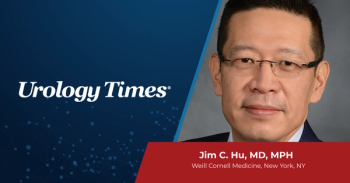
Jim C. Hu, MD, MPH, discusses the functional advantages of a posterior approach to endopelvic neurovascular total sparing (PATENTS) robotic-assisted radical prostatectomy.

Aleece Fosnight, MSPAS, PA-C, emphasizes that timing is one of the most valuable diagnostic clues.

John Michael DiBianco, MD, discusses the design of the ongoing SOUL trial, which is assessing stent omission vs stent placement following uncomplicated ureteroscopy.

Ilaha Isali, MD, MSc, identifies major unresolved gaps in sex-specific bladder cancer research.

Daniel Spratt, MD, discusses how the ArteraAI Prostate Test (Post-RP) could help guide treatment intensification decisions.


Dean Elterman, MD, MSc, FRCSC, attributes the 99% catheter-free discharge rate in the BREEZE study largely to appropriate patient selection.

Steven A. Kaplan, MD, frames the greatest value of ProVee not as competition with other procedures, but as a compelling alternative to chronic medical therapy.
Steven A. Kaplan, MD, emphasizes that ProVee is well suited for office-based or ambulatory settings and is designed to be performed under local anesthesia
Exogenous testosterone therapy and fertility are fundamentally incompatible.
Although the trial includes multiple tumor types, the presented data focus on RCC, predominantly clear cell disease.

Kevin C. Zorn, MD, FRCSC, FACS, outlines notable advances in the management of benign prostatic hyperplasia over the past year.
Regarding compounded testosterone products, Jesse N. Mills, MD, takes a balanced but cautious stance.
The review highlights the role of sex chromosome biology, particularly genes on the X chromosome that escape inactivation.
Dean Elterman, MD, MSc, FRCSC, emphasizes that a key differentiator of this new class of devices lies in material science and mechanism of action.
Hormonal changes influence fluid balance and bloating, increasing pressure within the pelvis.

Maxwell L. Sandberg, MD, highlights recent study findings on the role for perioperative systemic therapy for renal cell carcinoma with a tumor thrombus.
Mechanistically, Kaplan emphasizes that ProVee’s key differentiator is not simply that it is an expanding urethral device, but that it belongs to a new class of flexible, catheter-like technologies.