

"We aim to provide the best quality care we can at the locations closest to our patients," says Edward M. Schaeffer, MD, PhD.
"We aim to provide the best quality care we can at the locations closest to our patients," says Edward M. Schaeffer, MD, PhD.
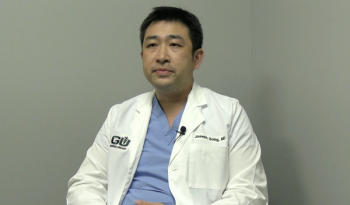
"Especially for prostate cancer, some of the sexual side effects, it's tough to talk about that when you're talking to your uncle or your brother who has it," says Joseph Song, MD.

"When they said that they value privacy over cost and convenience, I think that is the clearest sign that the stigma for men's health still exists," says Justin M. Dubin, MD.

“It's the next evolution of being able to provide precision care for our patients in the area of prostate cancer,” says Nitin K. Yerram, MD.

"We really need better options with the least side [amount of] effects for these patients," says Zhina Sadeghi, MD.

"My hope is that from the KL2 data that I'll generate, hopefully in the next 6 to 12 months, we can apply for an RO1 to push this one step further so that we can benefit other people with brain tumors, other people with strokes, and other peoples with other neurological disorders with bladder symptoms," says Olivia H. Chang, MD, MPH, FACOG.

“Maybe the most important [finding] is that urinary tumor DNA does seem to be a good tool for detecting residual disease within this patient population,” says Joshua Linscott, MD, PhD.

“What was also interesting in our study was that when choosing a source of medications, we asked them, what made you decide to go with that option? And 62% of men said that they valued privacy above everything,” says Justin M. Dubin, MD.
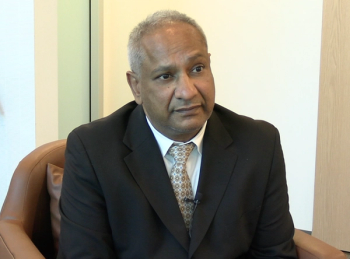
“We've been developing different techniques in HoLEP, but there is a steep learning curve,” says Akhil Das, MD.

Woodson W. Smelser, MD, discusses key bladder cancer data that was presented at the 2024 AUA Annual Meeting.

"In 2015, we had 3 employed urologists in our health network. Now, we have 19 employed urologists in our health network," says Edward M. Schaeffer, MD, PhD.

"I think these findings are critical in helping us craft educational resources that would be easily understood and easily disseminated by trusted health care providers," says Stephanie Gleicher, MD, MPH.

"Our data showed that the patient regret scores were very, very low in looking at the patients that went home the same day," says David I. Lee, MD, FACS.
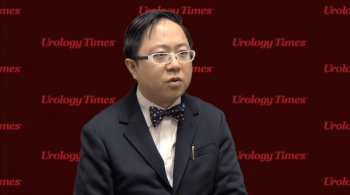
“The negative predictive value we want to be high, and the false positive rate we want to be low. None of those beat the radiologist reads in both of those categories,” says Robert S. Wang, MD.

"I think having success with that in humans will make [radiofrequency ablation] very, very valuable for the practicing urologist that can be done in the clinic without much training or anything like that," says Gamal M. Ghoniem, MD, FACS, ABU/FPMRS.

"We have a nice organizational framework for us to really provide effective care that really feels the same throughout the different regions," says Edward M. Schaeffer, MD, PhD.
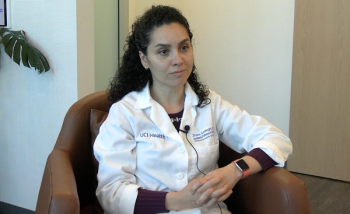
"Glean technology is a very brilliant technology that has been developed for basically portable urodynamics," says Zhina Sadeghi, MD.
“However, what direct to consumer does provide is convenience and privacy. Men's health has a huge stigma on it,” says Justin M. Dubin, MD.

"We...found that about 50% of women felt like infections are caused by lack of cleanliness and tight-fitting clothes," says Stephanie Gleicher, MD.
“We may be tempted to conclude a causal relationship based on the results of this analysis; however, we should avoid making statements implying a causal relationship,” says Jaleh Fallah, MD.
Suzette E. Sutherland, MD, MS, FPMRS, recaps the 2024 AUA session, “Panel Discussion: Which Type of Sling Is Best in the Index SUI Patient?”

"With regards to barriers to attaining health information, we found that a lot of women reported that medical language is just too complex," says Stephanie Gleicher, MD, MPH.
“Again, the importance of this paper to clinical practice is that it gives us real numbers on what the likelihood is of cancer in those patients with PI-RADS 3 or less,” says Jason M. Hafron, MD.
"Outside a randomized trial, we cannot make any conclusion about the causal relationship between conducting cytoreductive nephrectomy and improved outcomes," says Jaleh Fallah, MD.

"It's really interesting to see how potentially these differentially expressed genes could suggest a different biology based on the zone that they arose from," says Zeyad Schwen, MD.

"I would say the biggest take-home is that for Hispanic patients, there's a reduced likelihood of a successful fertility outcome that has been observed in an area that is enriched with a Hispanic population that's comparable to that of the US," says Devon M. Langston, MD.

“The first one [is] we confirmed the prognostic value of KIM-1. Overall, in INmotion010, patients with high KIM-1 clearly had a higher risk of recurrence,” says Laurence Albiges, MD, PhD.

"When looking at individual vaginal estrogen products prescribed by OB-GYNs median spending per claim for Vagifem and Yuvafem decreased and median spending per claim increased for Estrace and Estring," says Alexandra Tabakin, MD.

“We are trying to evaluate the ctDNA role in prognostication as well,” says Chinmay Jani, MD.

"When controlling for demographic and clinical factors, the number of live births was reduced for Hispanic men," says Devon M. Langston, MD.