
"It clearly shows that blocking HIF-2α is a meaningful way of interacting with disease biology in clear cell renal cell carcinoma," says Eric Jonasch, MD.
"It clearly shows that blocking HIF-2α is a meaningful way of interacting with disease biology in clear cell renal cell carcinoma," says Eric Jonasch, MD.

“[We’re] trying to anticipate with a smartwatch some of the catastrophic blood pressure changes and things that happen in these patients,” says Matthew J. Mellon, MD, FACS.
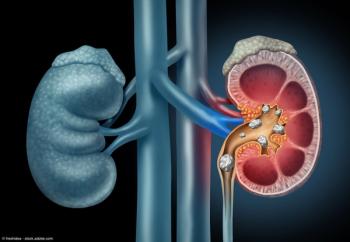
Thomas Chi, MD, MBA, discusses advantages to the CVAC System.

"I think it's going to help younger or less experienced urologists get more proficient at this procedure faster. That's where the AI is going to come into play," says Lewis S. Kriteman, MD, FACS.
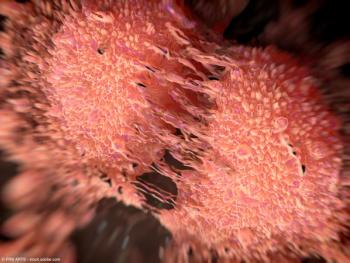
“In the period where a patient receives a diagnosis of favorable intermediate-risk cancer or higher and doesn't know what to do, there is a big unmet need/gap that we aim to serve with Unfold AI,” says Shyam Natarajan, PhD.

“I think that there will probably be much more accessible tools within the next 5 years, and almost certainly within the next 10 years,” says Yair Lotan, MD.

"It's really upon us, as the medical community, to be better about not just antibiotic stewardship, but also diagnostic stewardship," says A. Lenore Ackerman, MD, PhD.
"That's probably the biggest thing that I would say to somebody who's interested in urology is, do you think you can get on another patient's level?" says Emily Sopko, CNP.

"What we demonstrated was that at 30-day and 90-day interval outcomes, the patients actually had equivalent safety profiles compared to traditional ureteroscopy with basketing," says Thomas Chi, MD, MBA.
"We see use of AI-generated cancer maps in the decision-making process of understanding who is the right patient for what therapy, as well as planning out the specific therapy," says Shyam Natarajan, PhD.

"I think the fact that we're having these conversations, that they are being talked about at national meetings, and that we are bringing the patient voice into this is hugely important," says Mary W. Dunn, MSN, NP-C, OCN, RN.

"I like working alongside the residents, because they've taught me pretty much everything that I know about urology," says Emily Sopko, CNP.
“So, I think we have to be conscious that when we're developing these tools that we're inclusive,” says Yair Lotan, MD.

"We found that the performance of Unfold AI was actually an AUC of .89," says Shyam Natarajan, PhD.

“The technology is there, the experience is there now, and it's bringing it all together to lead to better outcomes [and a] shorter hospital stay,” says Kevin C. Zorn, MD, FRCSC, FACS.

"Often, we can do flexible cystoscopies for difficult Foley placements, or if we need to remove an indwelling stent at the bedside, I can assist with those things," says Emily Sopko, CNP.

“It's still relatively early, but this study in close to 1000 patients validated this algorithm, and it's now being studied prospectively as well,” says Yair Lotan, MD.
"From the perspective of lifestyle medicine, what is most important is what the patient is most motivated to work on in the here and now," says Stacy Loeb, MD, MSc, PhD (Hon).

“You're going to be able to use these catheters over time, for long periods," says Ana Lidia Flores-Mireles, PhD.
“Even if they're postmenopausal, we remove the ovaries, which puts them at a higher risk for other complications such as osteopenia,” says Laura Bukavina, MD, MPH, MSc.
"I'm able to really dedicate a lot of my time to patients and families for education," says Emily Sopko, CNP.

“There's definitely a lot of hype around the concept of artificial intelligence, and I think we're in the early phases of trying to figure out where it makes sense to adopt the technology and how to incorporate into clinical care,” says Yair Lotan, MD.

"I just want to underscore how important and how incredible it was to participate in this, because there was a lot of dialogue among the faculty and also the course participants," says Ziho Lee, MD.
"I think we could explore risk adjustment for surgeon reimbursement as a way of incentivizing providers and compensating them fairly for taking care of these more complex patients," says Victoria S. Edmonds, MD.
“So, while the natural epidemiological prevalence of disease is only 20% to 30%, we really should aim for studies where we can oversample the females to make sure that that medication truly is doing what it's doing in both males and females,” says Laura Bukavina, MD, MPH, MS.

"The patients who received SBRT were more likely to be Caucasian. We observed that far fewer Black men were treated with SBRT in our cohort," says Michael Stencel, DO.

“We are finding more and more information and evidence to support recommendations to try and reduce the infection rates,” says Christian Moro, PhD, BSc, BEd, MBus, SFHEA.

"For more rural practices, for ureteroscopy, they also received lower reimbursement than urban practices," says Victoria S. Edmonds, MD.
“[This way, I can] educate myself and put myself in their shoes and suggest a treatment or a plan or an evaluation, and then find out what their feedback might be from a collaborative standpoint,” say Robert D. Hoy, MPAS, PA-C.

"Our hope is that if we can improve the experience of their initial treatment for urinary retention, then particularly the patients who actually need to catheterize to maintain their kidney health, they would not be afraid of catheterization," says Jennifer Ann Meddings, MD, MSc.