

Yale School of Medicine
Latest Content
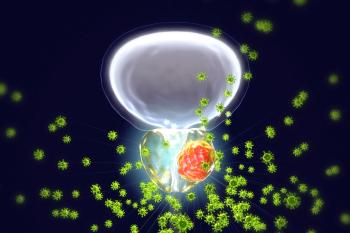
Results presented from a phase 1/2 trial of ARV-766 demonstrated efficacy and tolerability in patients whose metastatic castration-resistant prostate cancer progressed after androgen receptor pathway inhibitor therapy.
“What we need is continued work on integrating surgery and systemic therapy,” says Patrick Kenney, MD.

"As a kidney cancer community, we need to investigate these molecular subtypes prospectively in clinical trials to determine whether specific subtypes benefit from certain therapies or not," says David A. Braun, MD, PhD.

Interest in AI in prostate cancer pathology has picked up speed since initial attempts of computer-aided diagnosis of the disease more than a decade ago, according to Peter A. Humphrey, MD, PhD.

"We identified that in our site, we were ordering almost 1600 cystoscopy packs. A lot of the materials that were in those packages were unnecessary for an outpatient procedure," says Malissa Williams.
"I think people don't understand how exhausting it is for people to manage these symptoms day in and day out," says Leslie Rickey, MD, MPH.
"This may be a way of treating earlier stage aggressive prostate cancer with chemotherapy and selecting patients based upon their biological profiles," says Daniel P. Petrylak, MD.
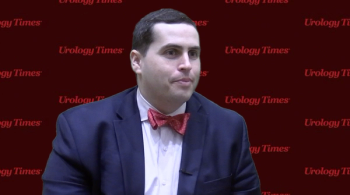
“It's important to note as well that the kidney cancer biology is really distinct from a lot of other solid tumors, and particularly other immunotherapy response to solid tumors,” says David A. Braun, MD, PhD.

"What we found is that there was rapid adoption and uptake of PSMA PET almost immediately after these agents were first approved in the United States," says Michael S. Leapman, MD, MHS.

"This is just another way that we can exploit the body's own natural system to take care of cancer," says Daniel P. Petrylak, MD.
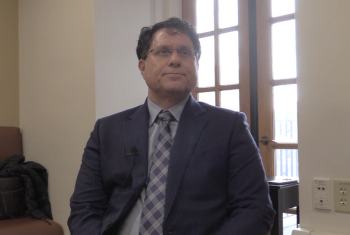
"I think that, across industries, AI is going to provide a great benefit to our day-to-day practice," says Michael Karellas, MD.

"It's really gratifying to see how the field has changed over the last 10 years," says Daniel P. Petrylak, MD.

"PLUS was created to start laying down the foundation for implementing prevention science, and understanding things that helped maintain bladder health [and] things that are risk factors for progression into bladder disease," says Leslie Rickey, MD, MPH.

Immunotherapy initiation within 1 month of death for patients with renal cell carcinoma increased from 0.5% to 2.6% over the course of the study.

"What we found is that overall, it was relatively effective at providing advice to patients on these pretty commonly encountered questions," says Sharath Reddy, MD.

"In general, I think there's a tremendous amount of variability in terms of how sexual medicine specialists treat patients who have had intimacy issues relating to robotic prostatectomy," says Stanton Honig, MD.
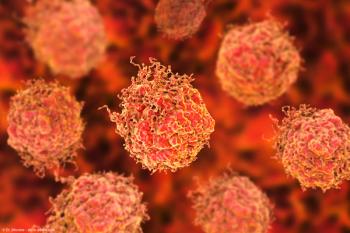
Researchers are exploring the potential of CAR T-cell therapy in patients with renal cell carcinoma who have disease progression following treatment with checkpoint inhibitors and VEGF inhibitors.


"I think what should be more appropriate is that the initial treatment decision does not impact [survival], but I don't think you can say that intervening aggressively for this lethal disease does not alter the course," says Isaac Y. Kim, MD, PhD, MBA.

“These findings provide encouraging evidence that immune checkpoint inhibitors can be effective in treating a subset of patients with penile squamous cell carcinoma," said co-first author Amin Nassar, a clinical fellow at Yale School of Medicine.
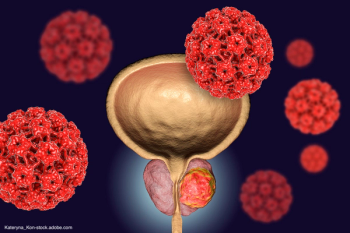
Yale Urology Chair Isaac Y. Kim, MD, PhD, MBA, has published his concerns surrounding interpreted results in the landmark ProtecT Study.
Expert urologist Michael S. Leapman, MD, MHS, provides comprehensive insight to the classification of prostate cancer and current treatment modalities available to patients.
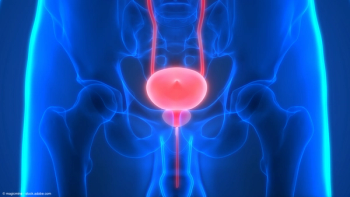
“The medication is given once a week for 6 weeks. It is an outpatient procedure with general anesthesia. And it is typically covered by insurance,” said Joseph Brito, MD.

Michael S. Leapman, MD, MHS, highlights a study of patient experiences with tissue-based genomic testing during active surveillance for prostate cancer.

"We also saw in the high-risk group that patients who identified as Black were much more likely to not receive treatment than their White counterparts," says Madison Novosel, BA.

"The Medicaid and uninsured patients had significantly lower odds of getting treatment than those who [have] private insurance," says Madison Novosel, BA.

Yale School of Medicine Associate Professor of Urology Michael Leapman, MD, MHS, and coauthors estimated the environmental impacts of prostate MRI and prostate biopsy.

“We need to leverage these great platforms to put out high-quality information with experts that people can listen to from home or on the go and get the information that they need,” says Stacy Loeb, MD, MSc.

"[This is] a group of patients that there are few treatments available for, and we're excited about the data," says Daniel P. Petrylak, MD.
Advertisement
Advertisement
Trending on Urology Times
1
FDA approves sildenafil oral film for men with erectile dysfunction
2
The UroOnc Minute: Adjuvant Therapy in Renal Cell Carcinoma, with Brian Shuch, MD
3
Head-to-head analysis shows OS benefit with apalutamide vs darolutamide in mCSPC
4
Pearls & Perspectives: Modern Semen Testing and Male Fertility Care, with Thomas Masterson, MD
5