


Kidney Cancer
Latest News
Advertisement
Latest Videos




CME Content
Advertisement
More News
As the year comes to a close, we revisit some of this year’s top content on the management of renal cancer.

Initial data from the trial are expected to be released in the first half of 2025.
A final decision on marketing authorization is anticipated for Q1 of 2025.
Initial results on ADI-270 are anticipated for the first half of 2025.
Overall, 76% of patients with a CD70 TPS of at least 50% achieved a reduction in tumor burden.
“Based on these data, casdatifan has the potential to be a future treatment option for kidney cancer," says Toni K. Choueiri, MD.

The RMAT designation is supported by interim data from the ongoing phase 1 TRAVERSE trial.
"The encouraging results suggest that alternating pazopanib with bevacizumab is a promising treatment regimen for renal cell carcinoma patients in the favorable risk group," says Saby George, MD, FACP.
According to the authors, "These results support the use of Benmelstobart plus anlotinib as a new first-line treatment for advanced RCC.”
On Cox regression analysis, glycoproteins were predictive of PFS response to nivolumab plus cabozantinib vs sunitinib (P < .01).
Late-breaking data from ESMO 2024 suggest ipilimumab / nivolumab may be a new standard of care for non-clear cell renal cell cancer.

“Our study highlights critical gaps in health care equity when it comes to treatments that have been shown effective in prolonging survival,” says Solomon Woldu, MD.
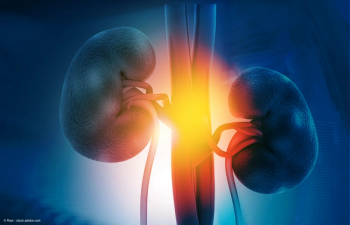
"Overall, we found that patients with recurrent RCC following adjuvant IO continued to have responses to different types of first-line systemic therapy," says Talal El Zarif, MD.
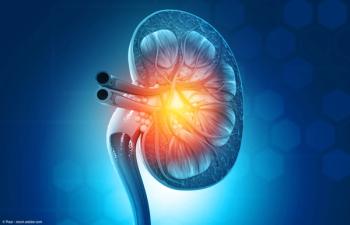
“The challenge now is to understand how these key aspects of mitochondrial metabolism become activated, why they stimulate metastasis, and whether we can safely block them,” says Ralph J. DeBerardinis, MD, PhD.
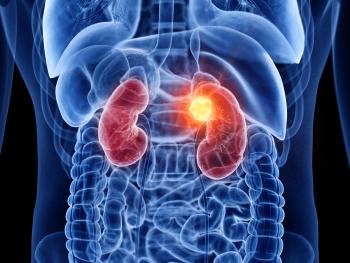
"We can individualize the access and the way we do the operation based on the patient's characteristics, and that hasn't happened in a very long time," says Ketan K. Badani, MD.

The grants will support research evaluating ATAD2 in advanced prostate cancer and 6MP in hereditary leiomyomatosis and renal cell cancer.
"While the addition of an ICI to low dose FOTIVDA did not improve PFS outcomes after prior ICI, we consider the control arm data an important, evidence-based and clinically meaningful contribution to the oncology community treating relapsed or refractory advanced RCC following front-line ICI combinations," says Michael P. Bailey.
“These findings provide a plausible mechanism for the enhanced clinical outcome with CBM588 now seen across 2 small, randomized trials,” write the authors.
This announcement comes on the heels of an FDA acceptance of an investigational new drug application for ADI-270 in June.
CBM588 could be exciting in cancer treatment because of its potential to enhance the efficacy of immune checkpoint inhibitor-based treatment, improve patient outcomes, and modulate the gut microbiota in beneficial ways,” says Sumanta Pal, MD.
"The addition of efficacy data from the KEYNOTE-B61 trial reinforces the important role of KEYTRUDA plus LENVIMA as a frontline treatment option for adult patients with advanced RCC regardless of histology," says Takashi Owa, PhD.
A phase 1 trial of ADI-270 in clear cell RCC is expected to launch in the second half of 2024.
"The positive trends emerging from the ongoing phase 1 trial of BMC128, particularly in combination with nivolumab, underscore the transformative potential of microbiome-based therapeutics in oncology,” says Gal Markel, MD, PhD, MBA.
"Despite the results of SURTIME and CARMENA, among others, we continue to hear discussions about the role of cytoreductive nephrectomy in conferences and literature, suggesting that this remains a question that has not been fully addressed," says Jaleh Fallah, MD.
"Our study looked at data from 5 trials of the combination therapy with an immune checkpoint inhibitor and the VEGF TKI evaluating if there's still any potential role for cytoreductive nephrectomy that is worth being investigated in prospective studies," says Jaleh Fallah, MD.
Advertisement
Advertisement
Trending on Urology Times
1
The UroOnc Minute: Adjuvant Therapy in Renal Cell Carcinoma, with Brian Shuch, MD
2
FDA approves sildenafil oral film for men with erectile dysfunction
3
Head-to-head analysis shows OS benefit with apalutamide vs darolutamide in mCSPC
4
URO-1 prostate biopsy devices adopted across Novant Health System as clinical study continues
5