Managing Overactive Bladder: From Dual Diagnoses to Geriatric Challenges
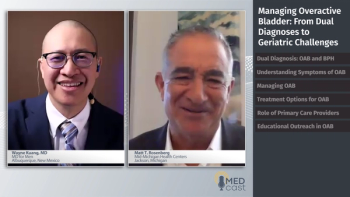
Wayne Kuang, MD; and Matt T. Rosenberg, MD, discuss how overactive bladder presents with distinct pathophysiological mechanisms between genders, requires different diagnostic approaches when distinguishing from benign prostatic hyperplasia in men, impacts quality of life in older adults, benefits from early primary care intervention, and necessitates improved patient advocacy and educational initiatives for optimal management outcomes.
Wayne Kuang, MD; and Matt T. Rosenberg, MD, discuss how overactive bladder presents with distinct pathophysiological mechanisms between genders, requires different diagnostic approaches when distinguishing from benign prostatic hyperplasia in men, impacts quality of life in older adults, benefits from early primary care intervention, and necessitates improved patient advocacy and educational initiatives for optimal management outcomes.
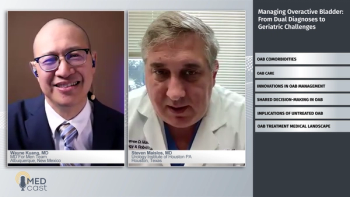
Panelists discuss how managing overactive bladder in older adults requires a holistic approach that integrates treatment of comorbidities, emerging therapeutic options, and quality-of-life considerations to optimize patient outcomes.
Panelists discuss how managing overactive bladder in older adults requires a holistic approach that integrates treatment of comorbidities, emerging therapeutic options, and quality-of-life considerations to optimize patient outcomes.
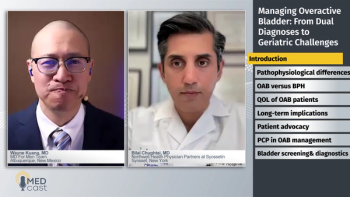
Experts discuss overactive bladder and the impacts on quality of life, distinguishing OAB from BPH, and how a delayed diagnosis can worsen symptoms.
Experts discuss overactive bladder and the impacts on quality of life, distinguishing OAB from BPH, and how a delayed diagnosis can worsen symptoms.
