



Genitourinary Cancers
Latest News
Advertisement
Latest Videos









Shorts
0:35
PCARE and PROs: Addressing penile cancer's hidden burden
12 days ago
by
Luis G. Medina, MD

0:22
What the evidence says on penile cancer margin management
2 months ago
by
Luis G. Medina, MD
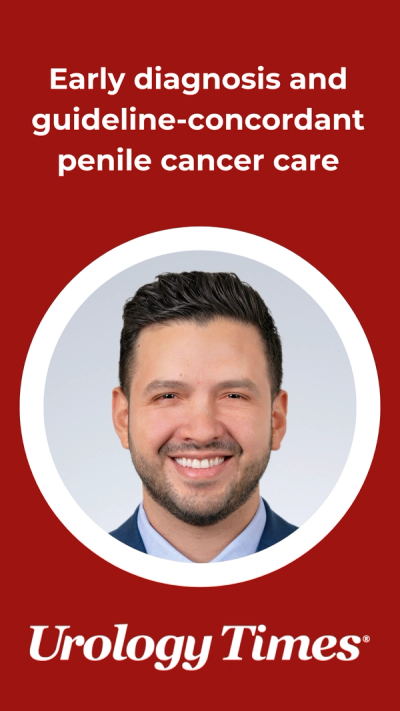
0:25
Early diagnosis and guideline-concordant penile cancer care
2 months ago
by
Luis G. Medina, MD

0:35
Lucia Nappi, MD, on the future for miR371 in testicular cancer
5 months ago
by
Lucia Nappi, MD, PhD, FRCPC

0:58
Kiera Liblik, MD, MSc, discusses inconsistent terminology in medical research
8 months ago
by
Kiera Liblik, MD, MSc

0:54
The evolution of testicular cancer survivorship care
9 months ago
by
Francisco Ramos, MD

4:24
World Cancer Day: Honoring Patient Resilience and Recent Advances in Urologic Oncology
9 months ago
by
Hannah Clarke
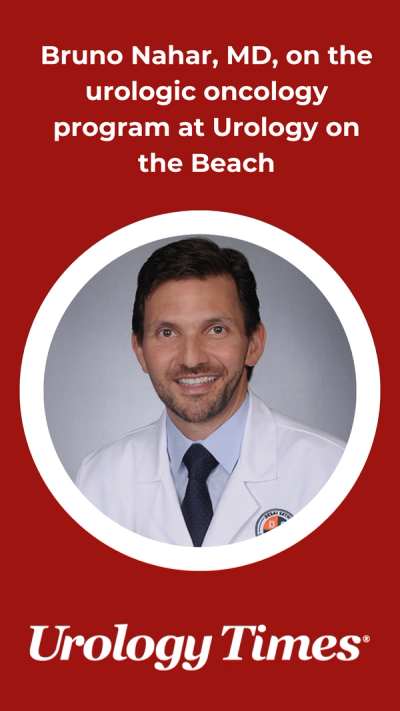
1:07
Bruno Nahar, MD, on the urologic oncology program at Urology on the Beach
10 months ago
by
Bruno Nahar, MD
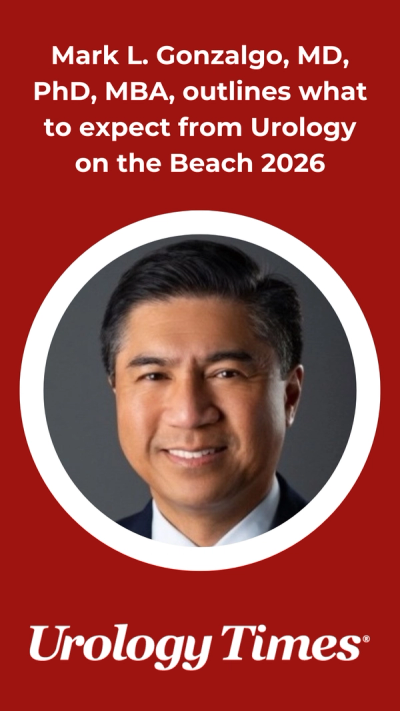
1:26
Mark L. Gonzalgo, MD, PhD, MBA, outlines what to expect from Urology on the Beach 2026
10 months ago
by
Mark L. Gonzalgo, MD, PhD, MBA
Podcasts


CME Content


Advertisement
More News

In this first installment of a 2-part interview, guideline chair professor Axel Heidenreich outlines key updates in the management of testicular cancer, with a strong focus on deintensification.

The assay is designed to detect multiple cancers, including prostate, bladder, and kidney cancer, through a simple, non-invasive urine sample.

The phase 2 PROHEAR trial is assessing the safety and efficacy of ACOU085 in preventing ototoxic hearing loss induced by cisplatin-based chemotherapy.

Joshua Palka, DO, reflects on the key trends that shaped urologic oncology in 2025, emphasizing the growing role of precision medicine across disease states.

The subcutaneous formulation of pembrolizumab also received FDA approval in September 2025.

The approval is supported by data from the phase 3 MK-3475A-D77 trial.

Take a look through key stories from last month, including regulatory news, trial updates, and other practice-changing advancements.

The findings highlight a lack of awareness on the signs and symptoms of prostate cancer, as well as common misconceptions about testicular cancer.

"Pediatric-type cancer diagnoses in adults are rare, and there are important differences in caring for children with genitourinary malignancies compared with adults," write the authors.

The bkActiv S series is designed to guide nonsurgical urologic, colorectal, and pelvic floor procedures.

The Cancer BioShield platform is being assessed as a treatment for lymphopenia in adult patients with refractory or relapsed solid tumors, including genitourinary tumors.

ACOU085 will be administered in 1 ear, with a matching placebo injection in the respective contralateral middle ear.

"We’ve achieved a lot, but the focus now must shift from cure alone to comprehensive, patient-centered care," says Vladimir Hugec, MD.

A list of facts and trends to know about the current landscape of urologic cancer management and research in the US.

"This brief review captures the evolving role of miRNAs, focusing on their clinical relevance and implications as well as future directions for more effective targeted therapeutic interventions," write the authors.
The approval is supported by data from the phase 3 CheckMate-67T trial.

The study showed significant reductions in both anxiety and depressive symptoms following the intervention.

"RPLND is an attractive option for those who prefer to avoid chemotherapy," write Jiping Zeng, MD; Timothy A. Masterson, MD; and Clint Cary, MD, MPH, MBA.

Investigators observed promising clinical effect with the EGFR / HER3 bispecific antibody-drug conjugate.

“As health care professionals, we should take a multidisciplinary approach to addressing the stress of a cancer diagnosis by helping mitigate financial toxicity, treatment burden, and emotional impact on both the patient and their family," says Mouneeb M. Choudry, MD.

“While the medications might be covered, while the surgical treatment might be covered, we all know that mental health and dental care are one of those things where people have large copays, long delays to care, and it is very clear to see that from our study,” says Laura Bukavina, MD, MPH, MSc.

“Fortunately, the chemotherapy regimens that Dr. Einhorn put together in combination with the surgical approaches with Dr. Donohue really revolutionized the cure rates and the care for men with testicular cancer,” says Clint Cary, MD, MPH, MBA.
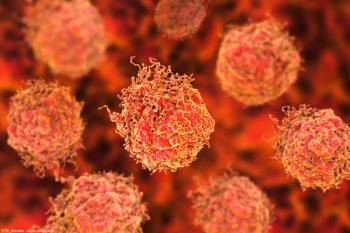
"I think the micronized formulation is something to think about," says Gautam Jayram, MD.
Advertisement
Advertisement
Trending on Urology Times
1
Adding darolutamide to ADT and radiation improves MFS in very high-risk localized prostate cancer
2
PROTEUS Substudy: Perioperative apalutamide plus ADT improves EFS vs surgery alone
3
Updated CAPItello-281 data show numerical OS benefit with capivasertib in PTEN-deficient mHSPC
4
Daniel Heng, MD, highlights final LITESPARK-011 results in advanced ccRCC
5