




Mark Frydenberg, MD, of Australia's Monash University, discusses whether multiparametric MRI is ready to be used as a screening modality for prostate cancer.

Mark Frydenberg, MD, of Australia's Monash University, discusses whether multiparametric MRI is ready to be used as a screening modality for prostate cancer.

In this interview, Mark Frydenberg, MD, discusses the evolution of PET scanning, its clinical indications, its advantages and drawbacks, and key questions that remain about its use.

"While much work is still to be done, we have excellent evidence that there is a beneficial class-like effect for the androgen inhibitors enzalutamide, apalutamide, and darolutamide used within the current definition of men with M0 CPRPC," write Michael Cookson, MD, and Tony Rodriguez, MD.

Neoadjuvant chemohormonal therapy warrants consideration in the management of men undergoing radical prostatectomy for clinically localized high-risk prostate cancer, said James Eastham, MD, at the American Society of Clinical Oncology annual meeting in Chicago.

Results of a phase III trial show the benefit of darolutamide (Nubeqa) in reducing the risk of metastases or death compared with placebo in men with nonmetastatic castration-resistant prostate cancer.

Race does not affect oncologic response to treatment with docetaxel (Taxotere)/prednisone in men with metastatic castrate-resistant prostate cancer, according to research presented at the American Society of Clinical Oncology annual meeting in Chicago.

Adding enzalutamide (XTANDI) to androgen deprivation therapy significantly improves outcomes for men with metastatic hormone-sensitive prostate cancer regardless of whether they received prior chemotherapy.

The largest analysis of active surveillance for metastatic renal cell carcinoma presented to date shows that a proportion of patients can be safely observed without need to start systemic therapy right away.

18F-DCFPyL PET/CT imaging demonstrated excellent performance in identifying regional or distant metastases in men with prostate cancer in the prospective OSPREY study.

"While the safety and feasibility of the renal mass biopsy procedure has been established, if or when to obtain the biopsy remains a topic for active discussion," writes Badar M. Mian, MD.

A pivotal phase II trial of a novel MRI-guided ultrasound ablation treatment exceeded its primary efficacy endpoint of PSA decline in men with organ-confined prostate cancer.

On the basis of findings from the KEYNOTE-426 study, the combination of pembrolizumab (KEYTRUDA) plus axitinib (Inlyta) represents a new standard as front-line treatment for metastatic clear cell renal cell carcinoma, said Thomas Powles, MD.

"KEYNOTE-426 marks an exciting breakthrough in the management of advanced and metastatic RCC. Indeed, the study’s aftershocks are sure to be felt in the mRCC space for years," write Fern Anari, MD, and Alexander Kutikov, MD.

"This report brings to light an often-suspected but previously undocumented clinical issue in great and alarming detail," says Badar M. Mian, MD.

Other products in this round-up include treatments for advanced renal cell carcinoma, metastatic urothelial cancer, and more.

A significant proportion of men who progress radiologically while on the androgen receptor inhibitor enzalutamide (XTANDI) do not meet standard criteria for PSA progression, reported Fred Saad, MD.

"Deciding what care is appropriate is already extraordinarily difficult but will be a growing problem for the next generation of physicians and society," writes Peter C. Albertsen, MD.

Integration of tumor genetic testing and genomically-informed therapies into clinical practice for patients with advanced prostate cancer are featured in updated National Comprehensive Cancer Network guidelines on the management of prostate cancer (version 2.2019).

More research is needed to determine the value of using magnetic resonance imaging to predict pathology outcomes following radical prostatectomy, according to a study presented at the AUA annual meeting in Chicago.

Alterations in DNA damage response genes, excluding ATM, correlate with improved outcomes in relapsed/advanced urothelial cancer.

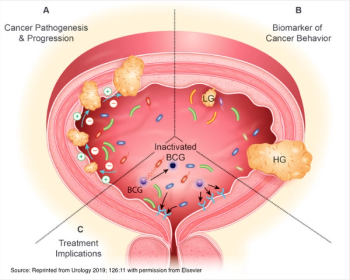
As urologists maneuver through the third shortage of bacillus Calmette-Guérin during the past decade, there is a sense of urgency to find short- and long-term alternative treatments to the only FDA-approved BCG strain as a therapeutic agent for nonmuscle-invasive bladder cancer.

Pyruvate kinase, a primary driver of tumor glycolysis, is promising both as a biomarker of bladder cancer and as a drug target, researchers reported at the 2018 Society of Urologic Oncology annual meeting in Phoenix.

"In this study, even if only the higher risk subgroup (unfavorable PSMs and advanced stage/grade) were to receive adjuvant treatment, nearly 75% of patients may potentially be overtreated," writes Badar M. Mian, MD.

New data suggest it may be possible to use computer-augmented cystoscopy to aid in diagnostic decision-making and improve the diagnostic yield of papillary bladder cancers.

"Therapeutic layering... is now becoming commonplace in the initial treatment of newly diagnosed metastatic prostate cancer," writes Leonard G. Gomella, MD.