An updated guideline on localized kidney cancer as well as a look at active surveillance as initial management for renal masses <2 cm were among the noteworthy kidney cancer studies at the AUA annual meeting in Boston.

An updated guideline on localized kidney cancer as well as a look at active surveillance as initial management for renal masses <2 cm were among the noteworthy kidney cancer studies at the AUA annual meeting in Boston.

Other products discussed include cancer tests, an app to connect patients with specialists, a revenue management system, and more

Other take-home messages in penile/urethral cancer included discussion of proposed 2018 AJCC penile cancer guidelines as well as the finding that in women with primary urethral cancer, adenocarcinoma was the most common pathology.

A study aimed at further elucidating the mechanism of action of sipuleucel-T (Provenge) in advanced prostate cancer provides fairly convincing evidence that the immunotherapy agent induces T-cell responses in humans, says Charles G. Drake, MD, PhD.

Among the AUA annual meeting take-home messages in basic science is that the immune co-stimulatory molecule B7-H4 is highly expressed in the luminal subtype of bladder urothelial carcinoma and is associated with poor survival.

Other pipeline developments include a new company formed to develop OAB treatments, a phase III urothelial cancer study meeting its primary endpoint, the formation of a partnership to study RCC treatment, and more.

Urologist Henry Rosevear, MD, reviews his personal highlights from AUA 2017, along with a few bumps in the road.

The FDA has approved pembrolizumab (Keytruda) for treating any solid tumors that exhibit DNA mismatch repair deficiency.

Some patients being treated with nivolumab (Opdivo) for advanced renal cell carcinoma may still derive benefit if continued on the immunotherapy after disease progression, according to an analysis of phase III study data.

“Modern immunotherapy is active in advanced urothelial carcinoma and represents the most important advancement in the treatment of this disease in over 30 years,” says investigator Arjun V. Balar, MD.

Urology Times asked members of our editorial advisory board: Has the USPSTF gone far enough with its new draft recommendation on screening for prostate cancer?

This article discusses the current status and potential future developments in immunotherapy for genitourinary malignancies with insights from urologic oncology specialists Hyung L. Kim, MD, and Daniel P. Petrylak, MD.

The role of protein- and cell-based urinary biomarkers for bladder cancer detection and surveillance is controversial, and in 2017 these assays have yet to come into widespread use among urologists. Their uptake is expected to increase, however, considering that the AUA/Society of Urologic Oncology “Guideline on Diagnosis and Treatment of Non-Muscle Invasive Bladder Cancer” that was released in 2016 identifies situations for using urinary biomarkers, according to Badrinath R. Konety, MD.

This article highlights the key points of two urologic cancer guidelines (which provide evidence-based guidance) and two consensus statements (which provide consensus recommendations by a multidisciplinary panel of experts) that have been published in the past year.

Targeted treatment with a small molecule RNA inhibitor demonstrates promising activity for promoting apoptosis of prostate cancer cells in culture, report investigators from Scripps Florida.

“The data from our study show that combination therapy [for metastatic renal cell carcinoma] may offer a much higher response rate with manageable side effects,” says study author Jianjun Gao, MD, PhD.

A recent study found that compared to white light cystoscopy, fluorescent cystoscopy was linked to a 41% decreased risk of bladder cancer recurrence at less than 3 months.

Other pipeline developments include efficacy results for a bladder and prostate cancer drug, an infertility tool to predict sperm quality, the initiation of an immunotherapy combination for mUC, and more.

The noninvasive molecular test for detecting recurrent urothelial carcinoma also demonstrates high negative predictive value in a prospective study.

Since passage of the Affordable Care Act, the number of testicular cancer patients with insurance has dwindled, while rates of advanced testis cancer have climbed, according to a recent study.

New research suggests that post-surgery symptoms may last for at least 3 months in cystectomy patients and worsen over time in some cases, posing unique management challenges for urologists.

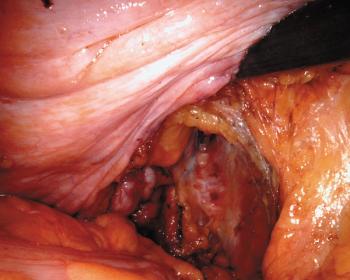
The purpose of this article is to discuss important principles of radical cystectomy, whether performed using the open, laparoscopic, or robotic approach.

Nearly one-third of men with testicular cancer undergo diagnostic or therapeutic interventions that are at odds with guidelines from the National Comprehensive Cancer Network (NCCN), according a study published in the Journal of Urology (2017; 197:684-9).

Persistent clinical benefit was seen among a small group of patients with metastatic renal cell carcinoma who had to discontinue therapy with the PD-1 inhibitor nivolumab (Opdivo) because of immune-related adverse events, according to a study presented at the Genitourinary Cancers Symposium in Orlando, FL.

Administration of broad-spectrum antibiotics in patients with metastatic renal cell carcinoma (RCC) undergoing treatment with immune checkpoint inhibitors may have a negative effect on the efficacy of the immunotherapy drugs, according to the results of a recent retrospective analysis.