Articles by J. Brantley Thrasher, MD
"During these times of uncertainty, panic, and social distancing associated with COVID-19, the American Board of Urology is sensitive to the additional stress this pandemic has placed on urology practices and urologists’ ability to meet their certificate requirements," writes J. Brantley Thrasher, MD.

Several decades of data show that Black men are less likely to be screened and treated for prostate cancer than their white counterparts. In this interview, Kelvin A. Moses, MD, PhD, of Vanderbilt University Medical Center, Nashville, TN discusses the reasons for these disparities and how practicing urologists can address them.

"A more standardized protocol that is office based, reliable, and reproducible as well as cost- and time-efficient is required to entice more urologists to abandon the TRUS-BX approach," writes J. Brantley Thrasher, MD.

In this interview, Chandru P. Sundaram, MD, explains the important patient and tumor characteristics to consider in deciding between partial and radical nephrectomy.

"The last several years have been particularly exciting in the area of metastatic castrate-resistant prostate cancer," writes J. Brantley Thrasher, MD.

In this interview, Mark Frydenberg, MD, discusses the evolution of PET scanning, its clinical indications, its advantages and drawbacks, and key questions that remain about its use.
In this interview, Jim Kovarik, PA-C, discusses the role of advanced-practice providers in a urology practice, how they are trained, and what procedures they can and should perform.
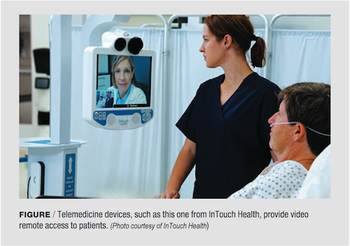
AI is poised to revolutionize use of medical data, but challenges remain.

In this interview, John W. Davis, MD, discusses the advantages and limitations of focal therapy, the ideal candidate, and what current guidelines say about its use.



