The SOPHIA2 trial will assess the safety and efficacy of the UroActive implant in men with SUI.
The SOPHIA2 trial will assess the safety and efficacy of the UroActive implant in men with SUI.

Here’s a look back at notable news between April and June 2025.

The label expansion follows the FDA approval of an expanded label for 177Lu-PSMA-617 for use in patients with mCRPC after ARPI therapy and before chemotherapy.
Catch up on all the notable drug and device approvals in urology over the past year.

"The TALAPRO-2 results provide much-needed hope to patients who remain in high unmet need for effective treatment options," said Neeraj Agarwal, MD, FASCO.
"We will be looking not only at how well this software performs in a busy clinical setting and whether diagnostic accuracy and efficiency improves, but also assessing the experience of clinicians and patients, and looking at the impact on workflow," says Clare Verrill, BM, FRCPath, MMedEd.
The positive CHMP opinion is supported by findings from cohort 1 of the phase 3 THOR trial.
“CORE-001’s excellent efficacy, long-term durability of response, and favorable benefit-to-risk-ratio profile seen with combination cretostimogene and pembrolizumab suggest the potential for a novel bladder-sparing therapy in the BCG-unresponsive NMIBC setting,” said Roger Li, MD.
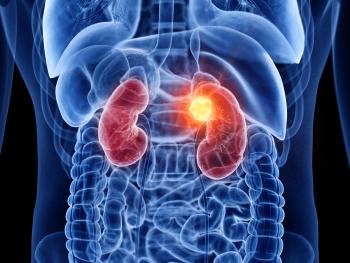
Circulating kidney injury molecule-1 (KIM-1) may be a biomarker for minimal residual disease, disease recurrence, and benefit from adjuvant atezolizumab in patients with renal cell carcinoma at increased risk of recurrence, according to a retrospective analysis of the phase 3 IMmotion010 trial.
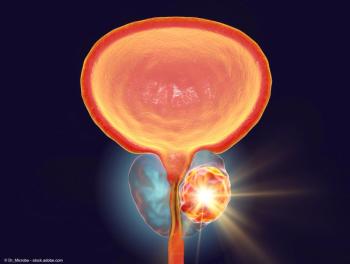
A post-hoc analysis of the phase 3 ARAMIS trial provided additional efficacy evidence for darolutamide in nmCRPC, including benefits related to prostate cancer–specific survival and reaching a PSA level <0.2 ng/mL.

In the EMBARK trial in patients with nonmetastatic hormone-sensitive prostate cancer, patients with good PSA responses at 37 weeks had their treatment suspended until their PSA started to rise again.
Adding cabazitaxel to abiraterone acetate and prednisone significantly reduced the risk of disease progression or death in patients with mCRPC previously treated with ADT plus docetaxel for HSPC.

RAG-01 is an saRNA therapy that is delivered via intravesical instillation and is designed to target and activate p21, a tumor suppressor gene.
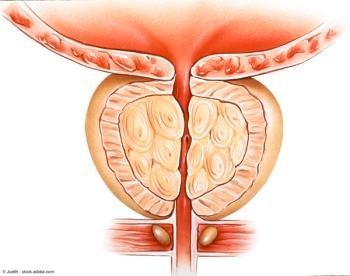
“Our results demonstrated that treatment with [the] Optilume BPH procedure resulted in significant symptom relief while still preserving erectile and ejaculatory function,” said Olivia Copelan, MD.

Combination treatment with burst wave lithotripsy and ultrasonic propulsion for small, asymptomatic renal stones is feasible.
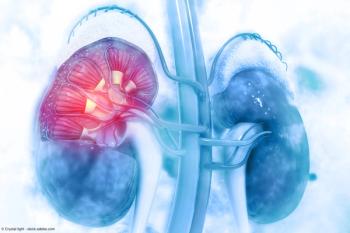
High-quality imaging with [68Ga]Ga-DPI-4452, a carbonic anhydrase IX (CAIX)-targeting radiolabeled peptide, was observed by researchers as early as 15 minutes after administration.

There was a statistically significant reduction in average daily micturition episodes and average daily urgency episodes with vibegron vs placebo.

There were no adverse events, such as penile bruising, swelling, edema, allergy, or penile fracture, observed in patients treated with shockwave therapy plus platelet rich plasma.

“At 60 months, nadofaragene allowed bladder preservation in nearly half of the patients in the CIS cohort and two-thirds of patients in the Ta/T1 cohort,” said Vikram Narayan, MD.

Treatment with the Zenflow Spring System, a minimally invasive surgical therapy for the treatment of benign prostatic hyperplasia, does not cause negative sexual side effects.

The addition of 18F-DCFPYL PSMA-PET imaging to multi-parametric MRI was associated with an improvement in the detection of clinically significant prostate cancer in men on active surveillance.

Steerable ureteroscopic renal evacuation using the CVAC Aspiration System demonstrated noninferiority vs standard ureteroscopy for kidney stone removal, according to findings from the prospective, randomized ASPIRE trial.
The UroActive artificial urinary sphincter devices were successfully implanted and activated in all patients.
The clearance of the IND application for RAG-01 will initiate the launch of clinical trials in the US.

"We look forward to announcing initial efficacy and safety data from the study, which we expect will be at the end of this quarter," says Salim Yazji, MD.

iTind is a temporary nitinol device used to treat lower urinary tract symptoms caused by benign prostatic hyperplasia.
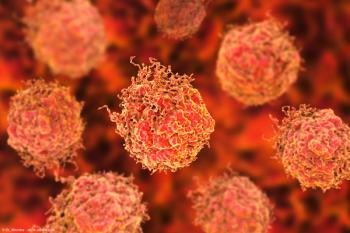
The study is exploring the small activating RNA therapy RAG-01 in patients with BCG-unresponsive non–muscle-invasive bladder cancer.
The application for UGN-102 for low-grade intermediate-risk non–muscle-invasive bladder cancer is based on findings from the phase 3 ENVISION trial.
The approval is based on data from the phase 3 CheckMate-901 trial, which demonstrated improved overall survival and progression-free survival with the nivolumab-combination therapy vs cisplatin/gemcitabine alone.
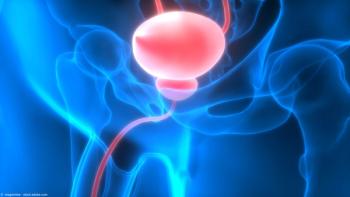
Adjuvant chemotherapy after nephroureterectomy continued to show an efficacy benefit versus surveillance in patients with upper tract urothelial cancer, according to long-term follow-up data from the phase 3 randomized POUT trial.

September 19th 2021

March 18th 2021