

All patients treated with 177Lu-rhPSMA-10.1 had reductions in their PSA levels from the start of treatment and none experienced a serious treatment-related adverse event.
All patients treated with 177Lu-rhPSMA-10.1 had reductions in their PSA levels from the start of treatment and none experienced a serious treatment-related adverse event.
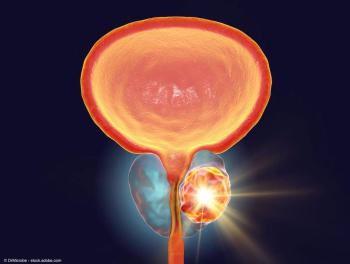
“99mTc‐PSMA-SPECT/CT is useful in the primary diagnosis of prostate cancer,” the authors wrote.
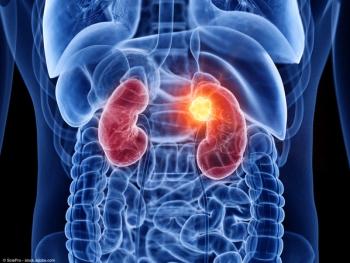
“The results suggest there is a clinically meaningful population of patients who can experience a long-term survival benefit from tivozanib over sorafenib,” said Kathryn E. Beckermann, MD, PhD.

“The more informed the patients are, the more likely they are to participate in decision making…Patient engagement in decisions reduces decisional regret and fosters patient satisfaction with treatment outcomes,” the researchers wrote.
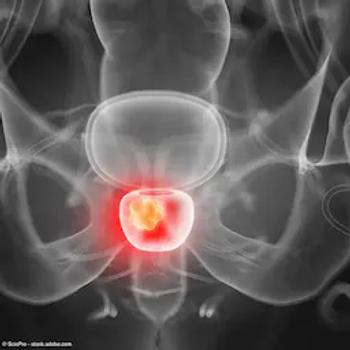
“This data supports the clinical benefit of 177Lu-PSMA-617 in real-world clinical practice,” the researchers wrote in their poster conclusion.

The applications in the EU and Japan are both based on findings from the phase 3 EV-302 trial.
PSMA-PET imaging has successfully disrupted the prostate cancer paradigm and experts agree that unleashing the full potential of this breakthrough requires a multidisciplinary approach.

The application is based on findings from the phase 2 DESTINY-PanTumor02 trial.
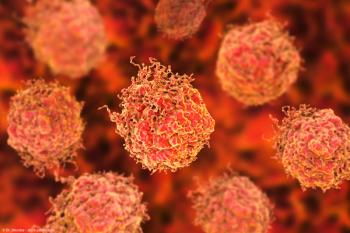
Beyond being highly predictive of future recurrence, uMRD was also shown to enable quantitative evaluation of molecular response to nadofaragene.
The approval is based on results from the phase 3 THOR trial.

Data showed a similar incidence of TEAEs and TRAEs between cycles 1-4 and cycles 5-6 of treatment with 177Lu-PSMA-617.
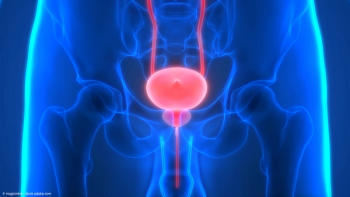
The mHealth mobile app provides patients with incremental education on post-cystectomy recovery, delivering information at various timepoints after the patient is discharged from the hospital.
NRX-101 is a fixed-dose combination of the broad-spectrum antibiotic D-cycloserine and lurasidone.
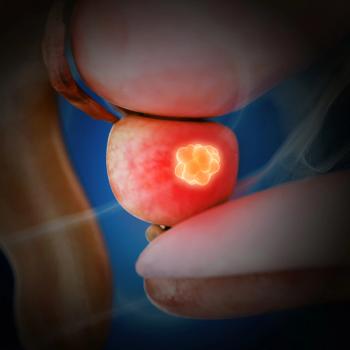
“To our knowledge, this is the largest investigation of the antitumor effect and toxicity of 225Ac-PSMA radioligand therapy in mCRPC,” the authors wrote.

The combination is approved for the treatment of patients with metastatic castration-resistant prostate cancer, regardless of mutation status.

The coverage policy went into effect on December 28, 2023.

The study is enrolling patients with relapsed/refractory metastatic castration-resistant prostate cancer who have received at least 1 next-generation androgen receptor pathway inhibitor.
Previously reported data showed promising efficacy signals and a manageable safety profile for the combination in patients with advanced solid tumors.
Over the past year, the FDA approved a multitude of new treatments and devices for use in urology practice.
"The Bladder CARE Assay's quantitative nature sets it apart from other tests," said Siamak Daneshmand, MD.
The approval is supported by findings from the phase 3 EV-302 trial, which showed that the combination led to significant improvements in overall survival and progression-free survival compared with chemotherapy.

225Ac-PSMA-J591 showed promising efficacy in mCRPC metastatic sites that are commonly resistant to 177Lu-PSMA-617.
The designations, which will expedite the development and regulatory review of cretostimogene grenadenorepvec in this setting, are supported by results from the phase 3 BOND-003 trial.
The application is based on results from the phase 3 CheckMate-901 trial.
The designation, which will expedite the development and regulatory review of TAR-200 in this setting, is based on findings from the phase 2b SUNRISE-1 trial.
“Our experience with TULSA demonstrates substantial post-procedure decreases in PSA level, PSA density, and prostate volume,” the researchers wrote.

Small index lesions on initial multiparametric MRI were linked to a less aggressive clinical course for patients with prostate cancer on active surveillance.

At 36 months’ follow-up the gene therapy nadofaragene firadenovec demonstrated durable complete responses in patients with high-risk, BCG-unresponsive non-muscle–invasive bladder cancer.
The priority review is based on results from the phase 3 EV-302 trial.
Primary chemoablative therapy with the mitomycin-containing reverse thermal gel UGN-102 induced complete responses in nearly 4 out of 5 patients with low-grade intermediate-risk non–muscle-invasive bladder cancer.