The NDA is supported by data from cohort 2 of the phase 2b SunRISe-1 trial.
The NDA is supported by data from cohort 2 of the phase 2b SunRISe-1 trial.
“Over the 4-year period since first-line protocol therapy initiation, [patients treated with] nivolumab plus cabozantinib achieved a 1.5-times longer mean TFS vs sunitinib," says Charlene Mantia, MD.
“Overall, our results continue to support the use of lenvatinib and pembrolizumab as a current standard treatment option in the first-line treatment of [patients with] kidney cancer," says Viktor Grünwald, MD, PhD.

Real-world data showed routine use of darolutamide regimens in community urology practice for patients with metastatic hormone-sensitive prostate cancer.
The erdafitinib intravesical delivery system TAR-210 was safe and showed strong initial efficacy in patients with non–muscle-invasive bladder cancer with select FGFR alterations.

A post hoc analysis of the phase 3 ATLAS trial showed that UGN-102 with or without TURBT induced meaningful disease-free survival and duration of response in patients with non–muscle-invasive bladder cancer.

More patients with nonmetastatic castration-sensitive prostate cancer reached an undetectable PSA level if they received enzalutamide, as a single agent or combined with leuprolide, vs if they received leuprolide alone.

Treatment with the intravesical gemcitabine delivery system TAR-200 led to complete responses in over 80% of patients with BCG-unresponsive, high-risk non–muscle-invasive bladder cancer, according to the latest results from the phase 2b SUNRISE-1 trial.

The application is based on findings from the phase 2 DESTINY-PanTumor02 trial.

Patients in the subcutaneous arm (n = 242) achieved a geometric mean Cavgd28 of 77.373μl/mL (90% CI, 74.555-80.297) compared with 36.875 μl/mL (90% CI, 35.565-38.235) in the IV arm (n = 245), for a geometric mean ratio of 2.098 μl/mL (90% CI, 2.001-2.200).
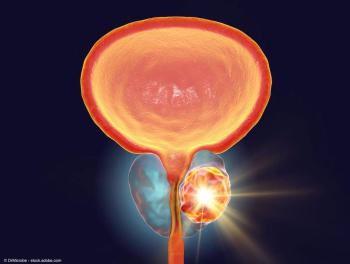
The investigators observed no dose limiting toxicities or serious adverse events among all patients who received an ARX517 dose of 3.4 mg/kg, the highest dose tested in the trial.

Much of the progress that has been observed in certain areas of prostate cancer care in the past 10 years could mirror what is on the horizon in the next 10 years in the bladder cancer space, according to Tom Jayram, MD.
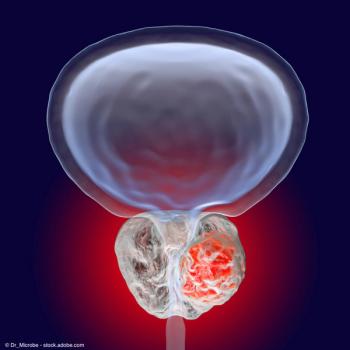
ARX517, a PSMA-targeting antibody-drug conjugate, demonstrated favorable efficacy and safety in a phase 1/2 trial in patients with metastatic castration-resistant prostate cancer.

The application is specifically for use of enzalutamide in patients with nonmetastatic hormone-sensitive prostate cancer with high-risk biochemical recurrence and is supported by data from the phase 3 EMBARK trial.

Although the use of immunotherapy treatments continues to become more prevalent in advanced renal cell carcinoma, high-level evidence showing benefit of sequential administration of these agents is limited.
The antibody-drug conjugate trastuzumab deruxtecan is being explored across a wide-range of HER2-positive solid tumors, including difficult-to-treat cancers.
The CDK4/6 inhibitor abemaciclib showed clinically activity in patients with heavily pretreated metastatic castration-resistant prostate cancer.
The 3- and 5-year MFS rates for those treated with enzalutamide plus leuprolide were 92.9% and 87.3%, respectively, compared with 83.5% and 71.4% for those given leuprolide alone.
Antibody-drug conjugates, including those targeting PSMA, are among the next wave of treatment advances in mCRPC.

Among patients with bladder cancer, increased public welfare spending led to an 8.18% survival increase for Black patients and a 44% closing of the disparity gap with white patients.
IS-002, an investigational, near-infrared, PSMA-targeting fluorophore, enhanced intraoperative cancer visualization during robotic prostatectomy.

Adjuvant nivolumab continued to demonstrate a clinically meaningful disease-free survival benefit in patients with high-risk, muscle-invasive urothelial carcinoma, according to extended follow-up from the phase 3 CheckMate 274 trial.

In discussing treatment determinations, Petrylak noted that for patients with low PD-L1 expression had decreased survival benefits compared with patients treated with chemotherapy in the monotherapy arms of the phase 3 KEYNOTE-361 (NCT02853305) and phase 3 IMVIGOR-130 (NCT02807636) trials.

The TKI/immunotherapy combination demonstrated strong clinical activity in patients with metastatic or locally advanced urothelial carcinoma (mUC) harboring FGFR alterations.
Phase 1/2 data showed that large surface area microparticle docetaxel is safe with early signs of clinical activity in patients with high-risk non–muscle invasive bladder cancer.

Now that pivotal trials have demonstrated a survival benefit with PSMA-targeted therapy in metastatic prostate cancer, researchers are hoping to deliver the exciting new approach earlier in the disease course.

October 26th 2023