

The software generates heatmaps to help identify prostatic tumors that may have been missed on initial reads.
The software generates heatmaps to help identify prostatic tumors that may have been missed on initial reads.
"The management of advanced prostate cancer has evolved significantly, driven in part by the integration of diverse biomarkers that guide treatment decisions from diagnosis through progression," says Nedim Ruhotina, MD.

"The take-home point from our study of these 92 patients is that in metastatic kidney cancer, there's a high concordance [between] MRD positivity and patients having progressive disease," says Alan Tan, MD.

At 24 months, 79% of patients experienced a response to therapy, and 56% achieved at least a 75% reduction in UUI episodes.
"One way to think about how Anktiva works is it is the first molecule, based on the package insert, that increases and proliferates the NK cells, the T cells, and the CD4+ and CD8+ T cells, without up-regulating the suppressive T cells," says Patrick Soon-Shiong, MD.
At a median follow-up of 40.2 months post-surgery, no patients had experienced a disease recurrence.
A phase 1/2 trial of ABO-101 is expected to launch in the first half of 2025.
In total, 28% of patients with luminal tumors and 41% of patients with nonluminal tumors experienced upstaging to nonorgan confined disease.

A recap of the FDA submissions and regulatory decisions in urology from January 2025.

The primary end point is 12-month radiographic progression-free survival.

A list of facts and trends to know about the current landscape of urologic cancer management and research in the US.

The data also showed that mortality plateaued in recent years despite declining in years prior.

"Wearable devices are increasingly being used to understand and improve male sexual dysfunctions," write the authors.

Overall, 403 medical students and other applicants were matched across 148 urology residency programs nationwide.
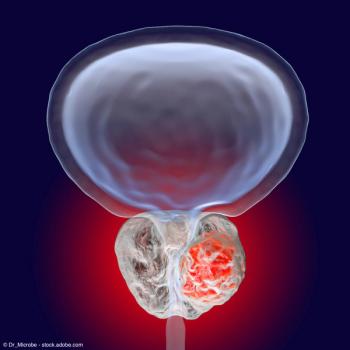
The incidence of late grade 2 or greater GU toxicity at 5 years was 12.5% among those who did experience acute toxicity vs 7.5% among those who did not.

"As we all know, Medicare rules do not always follow CPT directives. The same is true in this case," write Jonathan Rubenstein, MD, and Mark Painter.
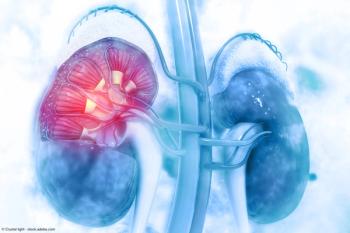
"What we show in our research is that cancers develop in different ways, depending on what the underlying genetic change is," says Taryn Treger.

“MPS2 could potentially improve the health of our patients by avoiding overdiagnosis and overtreatment and allowing us to focus on those who are most likely to have aggressive cancers," says Ganesh S. Palapattu, MD, FACS.

"This brief review captures the evolving role of miRNAs, focusing on their clinical relevance and implications as well as future directions for more effective targeted therapeutic interventions," write the authors.

WNT9B E152K was associated with a 2.5-fold increase in the risk of prostate cancer and reached genome-wide significance.

"The biggest thing that I took away from using the device is that it allowed me to do the procedure by myself, without an assistant," says Matthew J. Mutter, MD.
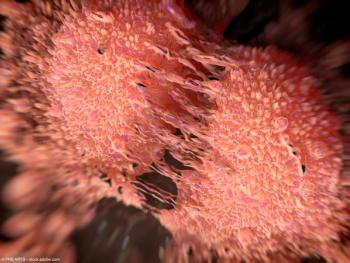
Overall, the open-label phase 1/2 study is assessing the safety and anti-tumor activity with INKmune across 3 dose levels.
Check out the key regulatory decisions set to happen early this year.
"From a coding standpoint and from the work performed and valuation of the work and descriptors, it is appropriate to report the dilation (50436 without or 50437 with new access as appropriate) along with the nephrolithotomy codes (50080/50081) when both are performed at the same time by the same provider," write Jonathan Rubenstein, MD, and Mark Painter.

According to the authors, these findings highlight the need to more effectively include Black men in prostate cancer research.
If approved, the marketing authorization application would be valid in all 27 European Union member states as well as in Iceland, Liechtenstein, and Norway.
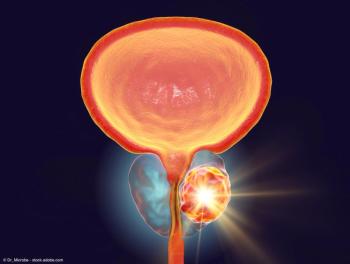
“The key here is I don’t believe that testosterone increases the risk of prostate cancer progression or biochemical recurrence," says Mohit Khera, MD, MBA, MPH.

"Please note that although this starts out as a balloon rather than just the injection of a biodegradable product, this device is actually fully biodegradable and is absorbed within 6 months of insertion," write Jonathan Rubenstein, MD, and Mark Painter.
64Cu-SAR-bisPSMA was previously granted a fast track designation in August 2024 for PET imaging of PSMA-positive prostate cancer lesions in patients with suspected metastasis who are candidates for initial definitive therapy.
Overall, 39% of those who received a university-formatted report and 56% of those who received a VA-formatted report were able to identify that they had prostate cancer.