

As the year comes to a close, we revisit some of this year’s top content on benign prostatic hyperplasia.
As the year comes to a close, we revisit some of this year’s top content on benign prostatic hyperplasia.

This prestigious recognition is given to one urologist or administrator each year who has significantly contributed to the field of urology within the first ten years of their practice.

"From a learning curve standpoint, there's not much to learn. It tends to be fairly quick in terms of your ability to do the procedure," says Matthew E. Sterling, MD.

"I think it's important that they go visit someone that does them. Go to the operating room, see it in person," says Matthew E. Sterling, MD.

"Some of it actually is self-selecting because people are hearing about it more and come in asking about it first," says Brian Friel, MD.

"The learning curve is fairly quick; you can pick this up pretty easily vs some of the other prostate procedures that can take a little bit more time to learn how to use," says Matthew E. Sterling, MD.
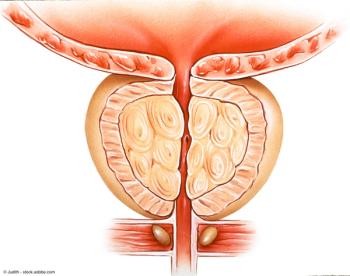
"The limitation of [TURP] is you're shaving out prostate tissue in a layer at a time, and you stop when you think you're deep enough, whereas with an Aquablation, you map all that out ahead of time," says Brian Friel, MD.

Dr. Shawn Zimberg and Dr. Dean Laganosky discuss the BioProtect Balloon Transplant System, a rectal spacer for use in prostate cancer radiation.
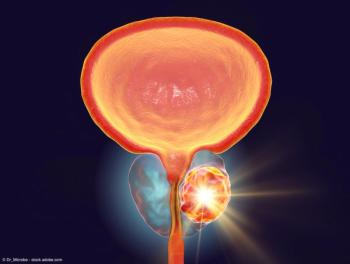
“This next-generation rectal spacing option is the first of its kind...and has the potential to provide an enhanced degree of protection from the genitourinary and rectal effects of prostate cancer radiation therapy,” said Dr. Laganosky.