Take a look through some of the notable data presentations at this year's ESMO Congress.

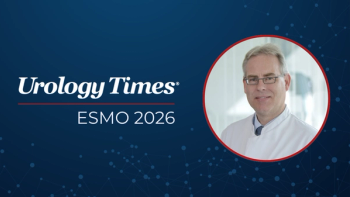
In this first installment of a 2-part interview, guideline chair professor Axel Heidenreich outlines key updates in the management of testicular cancer, with a strong focus on deintensification.
The approach to testicular cancer management continues to evolve, with growing emphasis on precision, risk stratification, and minimizing long-term treatment burden. The European Association of Urology recently released a comprehensive update to its testicular cancer guidelines, incorporating new evidence across the disease continuum—from diagnosis and pathologic assessment to stage-specific treatment and survivorship considerations. These updates were formally presented at the
In this first installment of a 2-part interview, guideline chair professor Axel Heidenreich outlines the breadth of the updated recommendations, including refined diagnostic pathways, standardized approaches to orchiectomy specimen evaluation, and nuanced, stage-adapted treatment algorithms for both seminomatous and nonseminomatous germ cell tumors. Notably, the guideline introduces evidence supporting treatment deintensification in carefully selected patients to reduce the risk of long-term toxicities.
Heidenreich, who also serves as the director of urology at the University Hospital Cologne in Germany, also discusses emerging roles for surgical management, such as nerve-sparing retroperitoneal lymph node dissection (RPLND) in low-volume metastatic seminoma, as well as evolving data supporting reduced chemotherapy exposure in certain high-risk stage 1 nonseminoma cases. Together, these updates reflect a broader effort to balance oncologic efficacy with quality-of-life outcomes in a predominantly young patient population.
Heidenreich: What we cover in the guideline is basically everything, starting from the diagnostic procedures, which are necessary to identify patients with testicular cancer. We also cover the necessities of the pathohistological work-up of an orchiectomy specimen, [including] how it should be done and at what time during the diagnostic process to consult a uropathologist. We cover all stage-dependent treatment options, stratified into patients who have seminomas and nonseminomas. We work through that from clinical stage 1 to marker-negative low-volume metastatic disease, which would be a clinical stage 2A/B, and then we have those patients who are more advanced in terms of metastatic disease.
Then we cover the different combination therapies, which are usually chemotherapy combined with postchemotherapeutic resection of residual masses. We cover specific aspects of radiation therapy, especially in patients who have brain metastases. We also cover the clinical situations in which you could deintensify treatment, because we know that many patients who receive 3 or 4 cycles of chemotherapy have long-term toxicities. All these long-term toxicities are associated with excess mortality; so, more patients die, not because of testicular cancer, but because of the [adverse] effects of the intensified systemic treatment. In specific clinical situations, we give recommendations on how to deintensify treatment without impairing oncological efficacy. And then we cover all aspects of follow-up procedures, which could be what you would call quality-of-life issues.
Heidenreich: This is one of the examples on deintensification of treatment for patients with low-volume disease—clinical stage 2A/B with lymph nodes no larger than 3 cm—who have been treated with 3 cycles of systemic chemotherapy or by radiation therapy. Those 2 treatment options then resulted in long-term toxicities. Five different international groups located in Europe and the US, more or less at the same time, developed the idea to cure patients with low-volume disease by just retroperitoneal lymph node dissection. Ideal candidates would be patients who have clinical stage 2A disease, [with] lymph nodes with a diameter of about 2 cm. It could be patients with clinical stage 2B disease, but lymph nodes should be no larger than 3 or 3.5 cm. Patients could also have de novo metastatic disease—at time of orchiectomy and at time of their initial staging, they already harbor lymph node metastases. Patients would also be amenable for this type of surgery if they are under active surveillance for clinical stage 1 disease, and then they develop lymph node metastases and progression in the lymph nodes.
In patients with equivocal lymph nodes, if you see a lymph node progression or an increase in lymph node site at the primary zone of your initial tumor-bearing testicle, and this progressing lymph node is 1 to 1.5 cm in size, we usually do not know if this is metastatic disease or if this is inflammatory disease. Usually, you have a follow-up CT scan or MRI scan about 8 weeks later to see if there's progressing disease or regressing disease. What we use in this situation, and which is also touched on in the guidelines, is a new biomarker. It's miRNA-371. If miRNA is positive, we know it's metastatic disease, and patients can go to surgery.
The drawback of surgery is not that it's an invasive procedure, but it is surgeon-dependent. This type of surgery should only be performed in centers [where] quite a lot of these surgeries [are done], and [where] the surgeons are very experienced in terms of nerve-sparing and dissecting out the correct templates—the areas where most of those lymph node metastases could be located. Everybody thinks we can do a surgery even if we only do 2 or 3 procedures a year, [but that is] associated with an increase in relapse rates. We define this in the guidelines. This is not a very complicated surgery in terms of technical difficulties, but it's a surgery that has to be done very appropriately, and that should only be done in centers of excellence. The other option, besides retroperitoneal lymphadenectomy, is another deintensification of treatment. It's a combination of focused radiation therapy, plus one cycle of systemic chemotherapy, which is carboplatin. This type of treatment also reduces the amount of radiation dose delivered. It has similar oncological outcomes as surgery, and it could be an alternative to surgery.
Heidenreich: What we see is based on Scandinavian studies. The studies from that SWENOTECA group showed that 1 cycle of BEP [bleomycin, etoposide, and platinum] is as oncologically efficacious as 2 cycles, but it reduces the treatment-associated toxicity.2,3 We stick with this one cycle of BEP because it's much better for the patient. We only recommend this type of treatment as an alternative to active surveillance in patients who have high-risk disease. In nonseminomas, high-risk disease is defined by the presence of lymphovascular invasion. You should also consider the amount of embryonal carcinoma, which is diagnosed in the primary orchiectomy specimen. Pathologists usually receive the removed testicle, then they check which kind of testicular germ cell cancer is present, they quantify these different elements of the histological subtypes, and they give you a percentage value. So, for example, you have a mixed nonseminomatous germ cell tumor; it’s maybe 80% embryonal carcinoma, 10% seminoma, and 5% teratoma. This is usually the information you need in order to decide who is a good candidate for adjuvant treatment. Lymphovascular invasion is a high-risk feature, but 52% of those patients will develop relapse if they are under active surveillance. On the other hand, 50% are cured without any adjuvant treatment. If you add in the percentage of embryonal carcinoma, and we see that the percentage of embryonal carcinoma is above 80%, we know 100% of those patients will have occult metastatic disease. We recommend one cycle of BEP in the presence of lymphovascular invasion, plus or minus a high percentage of embryonal carcinoma.
[For] all other patients, they usually undergo active surveillance, except for patients with 2 low-risk features. If you have a patient with a pure teratoma, or you have a clinical stage 1 patient who has a specific histological finding called malignant somatic transformation, those patients should undergo primary RPLND, even in clinical stage 1, because we know about one-third of those patients harbor microscopic lymph node metastases. Those lymph node metastases are chemo-refractory, so patients can only be cured by primary RPLND. That's the only exception in this low-risk potential.
REFERENCES
1. Heidenreich A, Berney DM, Boormans JL, et al. EAU Guidelines on Testicular Cancer. Accessed April 16, 2026.
2. Tandstad T, Dahl O, Cohn-Cedermark G, et al. Risk-adapted treatment in clinical stage I nonseminomatous germ cell testicular cancer: the SWENOTECA management program. J Clin Oncol. 2009;27(13):2122-2128. doi:10.1200/JCO.2008.18.8953
3. Tandstad T, Ståhl O, Håkansson U, et al; SWENOTECA. One course of adjuvant BEP in clinical stage I nonseminoma mature and expanded results from the SWENOTECA group. Ann Oncol. 2014;25(11):2167-2172. doi:10.1093/annonc/mdu375