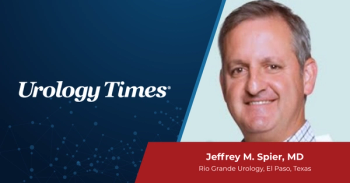
Jeffrey M. Spier, MD, reviews evidence on ARPI dose reduction in prostate cancer and discusses monitoring treatment response, tolerability, and dose reescalation.

Steven A. Kaplan, MD, emphasizes that ProVee is well suited for office-based or ambulatory settings and is designed to be performed under local anesthesia
In this video, Steven A. Kaplan, MD, director of the Men's Wellness Program at Mount Sinai Health System and a professor at Icahn School of Medicine at Mount Sinai, discusses the practical implementation, economic considerations, and clinical experience associated with the ProVee System for benign prostatic hyperplasia (BPH).
Kaplan emphasizes that ProVee is well suited for office-based or ambulatory settings and is designed to be performed under local anesthesia, much like placing a urinary catheter or performing a flexible cystoscopy. Because the procedure requires only minimal lidocaine and uses a flexible device, Kaplan sees little reason for it to be done outside the office unless reimbursement structures dictate otherwise. Compared with other minimally invasive surgical therapies (MISTs) that rely on rigid instruments, ProVee’s flexibility is a key advantage, contributing to patient comfort and procedural simplicity.
From an economic perspective, Kaplan notes that reimbursement remains the primary unresolved issue. Current discussions involve whether existing stent-related billing codes will be used and how relative value units will ultimately be assigned. He anticipates that reimbursement pathways may take 1 to 2 years to stabilize and advocates for a unified strategy among stent-based technologies to strengthen negotiations and ensure consistent coding. Such alignment, he suggests, would improve financial viability and procedural throughput in office practices.
Regarding safety and patient counseling, Kaplan highlights that the ProVIDE trial demonstrated mostly mild and transient adverse events, such as dysuria and hematuria. He does not expect adverse event rates to increase significantly as the device enters broader community use. Unlike other MISTs that involve steeper learning curves and multiple technical decisions, ProVee closely mirrors standard flexible cystoscopy, a core skill for urologists. The procedure involves minimal steps, a single device size, and straightforward deployment, resulting in an extremely short learning curve. Kaplan concludes that the simplicity and familiarity of ProVee make it easily adoptable by practicing urologists and even trainees, reinforcing its potential as a practical, office-based BPH treatment option.