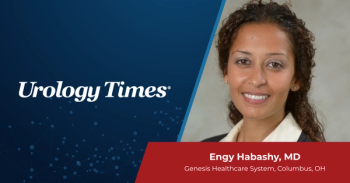
Engy Habashy, MD, discusses key takeaways from the 2025 AUA GSM guideline, including the role of androgens and hormonal therapies in managing genitourinary syndrome of menopause.

Amy Pearlman, MD, sits down with Katherine A. Amin, MD, to discuss the evolving landscape of female pelvic medicine, overactive bladder management, and fellowship training.
Welcome back to
In this episode of Pearls and Perspectives, host Amy Pearlman, MD, sits down with Katherine A. Amin, MD, FPMRS, FACS, FRCS, at the 2026 Urology on the Beach conference in Miami, Florida to discuss the evolving landscape of female pelvic medicine, overactive bladder (OAB) management, and fellowship training. Amin is an assistant professor of urology and the program director for the Female Pelvic Medicine & Reconstructive Surgery/Urogynecology Fellowship at the Desai Sethi Institute of Urology at the University of Miami.
Amin begins the discussion by sharing how national meetings serve as a forum not only for staying current on emerging therapies, but for challenging personal biases and refining how clinicians counsel patients about minimally invasive options for OAB. She reflects on the shift away from rigid, stepwise treatment algorithms toward shared decision-making, emphasizing how newer guideline updates, documentation practices, and payer considerations intersect in real-world clinical care.
Amin also explores what excites her most about treating OAB: the opportunity to meaningfully improve quality of life through expectation-setting, education, and long-term partnership with patients managing a chronic condition. From implantable tibial nerve stimulation to neuromodulation and Botox, she explains how she thinks about patient selection, counseling, and integrating new therapies into practice. Throughout the conversation, she underscores the importance of communication, both in clinic and in training, highlighting how developing a clear “talk track” is just as critical as mastering procedural skills.
The discussion then turns to medical education and mentorship, as Amin describes building a combined urology–gynecology fellowship program supported by robust institutional research infrastructure. She reflects on how fellowship training differs from residency, particularly in fostering autonomy, critical thinking, and continuity of care, and why seeing patients’ long-term successes is one of the most rewarding aspects of subspecialty training. From research opportunities and visiting professorships to emerging interests like office-based urethral bulking, this episode offers a candid look at how education, innovation, and patient-centered care continue to shape the future of female pelvic medicine.