Butterfly Medical has also submitted a premarket approval application to the FDA.

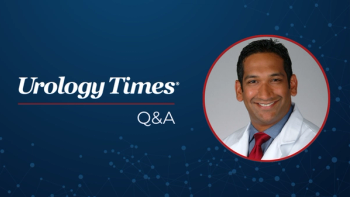
Delayed diagnosis and skipped nodal staging worsen penile cancer outcomes, according to Luis G. Medina, MD.
Penile cancer was rare enough that most urologists encountered relatively few cases, and late diagnosis remained frequent, according to Luis G. Medina, MD, an assistant professor of urology at the Medical University of South Carolina (MUSC) and MUSC Hollings Cancer Center and associate program director of the urologic oncology fellowship at MUSC. Managing these patients sometimes required clinicians to go the extra mile: At least 25% of patients experienced a diagnostic delay of more than 6 months, Medina said, which made close follow-up and timely treatment essential. For the primary tumor, he emphasized organ-sparing treatment whenever oncologically feasible. For regional disease, nodal staging should not be omitted, as skipping the nodes was associated with a difference of almost 40% in mortality. At least 30% of patients who needed an inguinal lymph node dissection (ILND) did not receive one, he noted.
Hesitancy around organ-sparing approaches stemmed from the historical reputation of penile cancer as an aggressive disease, which made smaller surgical margins uncomfortable for many surgeons.
“From histopathological analysis, we know that most low-grade lesions won’t extend beyond 5 millimeters from the visible margin,” Medina said. Although this did not apply to high-risk lesions, a margin of 5 to 10 mm should be safe for low-risk lesions, he said, adding that wider acceptance in clinical practice was likely as more high-quality evidence became available.
Organ-sparing treatment rates were higher at experienced centers, where adherence to guidelines was greater.¹ Medina attributed the disparity to greater familiarity with organ-sparing techniques at higher-volume centers and to the availability of a multidisciplinary team, including dermatologists, experienced pathologists, and reconstructive urologists, which made standardization more feasible. European data showed that centralization and standardized approaches increased organ-sparing treatment rates by 20%, according to Medina.
ILND carried a morbidity rate of approximately 30% for all comers.¹ When counseling patients, urologists should discuss every potential complication so that patients have appropriate expectations, Medina said. Among modifications to the initially described technique, preservation of the saphenous vein reduced lymphedema, and fascial-sparing and superficial ILND improved outcomes. Minimally invasive ILND represented an advance, particularly for clinically node-negative disease, and investigators have sought to evaluate it in clinical trials, including an active trial in the United Kingdom.
Dynamic sentinel lymph node biopsy also had an important role in nodal staging.² By identifying which patients actually required dissection, the approach could spare a substantial proportion of patients from ILND-related morbidity.
“If we can identify the ones that actually need the lymph node dissection, we’re sparing this morbidity to a big number of patients, which for negative lymph nodes will be close to 60% of patients,” Medina said.
Earlier recognition, broader use of organ-sparing treatment for appropriately selected lesions, consistent nodal staging, and technique refinements to reduce ILND morbidity were central to improving care for patients with penile cancer, according to Medina.
References