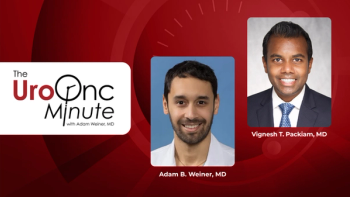
Vignesh Packiam, MD, discusses strategies to manage intravesical therapy toxicity in NMIBC, improve treatment tolerability, and preserve bladder function.
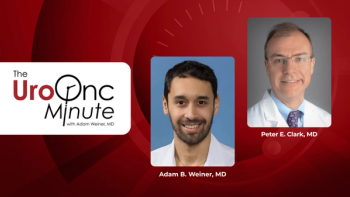
Adam B. Weiner, MD, is joined by Nikita R. Bhatt, MBBS, MCh, MMed, FRCS, to discuss the WASHOUT study, a prospective international collaboration examining outcomes among patients admitted with emergency hematuria.
Welcome back to
In this episode of The UroOnc Minute, recorded at the
Bhatt explains that despite the frequency and potential severity of emergency hematuria presentations, there are currently no evidence-based guidelines to standardize care. As a result, management often varies substantially between clinicians and institutions. The WASHOUT study found that delays between admission and definitive management were associated with significantly worse outcomes, including longer hospital stays, increased readmission rates, and mortality (OR, 1.02) (P = .00). Patients whose evaluation or intervention extended beyond 2 days experienced an average increase in length of stay of 5.6 days, along with greater 90-day risks of death and readmission. Additional factors linked to poorer outcomes included frailty, sepsis, upper tract obstruction, intensive care requirements, and malignancy-related hematuria.
The conversation also highlights the oncologic implications of these findings, as a substantial proportion of patients were ultimately found to have underlying urothelial malignancies. Bhatt discusses how incomplete inpatient evaluation, such as a lack of imaging or failure to establish a definitive diagnosis during admission, was associated with increased mortality, underscoring the importance of timely diagnostic workup.
Looking ahead, Bhatt describes ongoing efforts to use the WASHOUT data to help develop evidence-based pathways and future guideline recommendations advocating for emergent imaging at admission and intervention within 48 hours for persistent hematuria. Overall, she and her co-authors emphasize the need for more proactive, standardized approaches to emergency hematuria in order to improve both oncologic detection and overall patient outcomes.
REFERENCE
1. Byrnes K, Bhatt N, Ippoliti S, et al. The WASHOUT study: Early proactive intervention in emergency haematuria reduces length of stay, mortality and readmissions. Presented at: 2026 European Association of Urology Congress. London, England. March 13-16, 2026. Abstract P1005