Peter Clark, MD, discusses key updates to NMIBC guidelines, including revisions to risk stratification, the emerging role of biomarkers, and how to navigate treatment options for BCG-unresponsive disease.
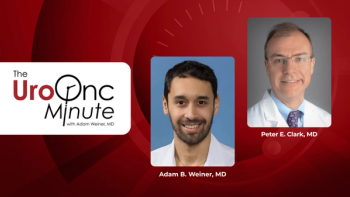
In this episode of The UroOnc Minute, host Adam Weiner, MD, is joined by David Canes, MD, for a thoughtful discussion on practical strategies to improve efficiency, reduce physician burnout, and preserve meaningful patient-centered care in urologic oncology.
Welcome back to
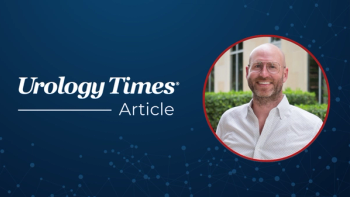
In this episode of The UroOnc Minute, host Adam B. Weiner, MD, speaks with David Canes, MD, associate professor of urology at Lahey Clinic, about improving efficiency in urologic oncology practice while preserving the physician-patient relationship. Drawing on his own experience with professional burnout, Canes distinguishes efficiency from productivity, emphasizing that the goal is not to see more patients, but to reduce administrative burden so clinicians can devote more time and attention to meaningful patient interactions.
The discussion explores practical strategies for optimizing clinical workflows, from refining electronic health record templates to adopting ambient AI scribes and other technologies that reduce documentation demands. Canes argues that deliberate investment in workflow optimization pays dividends over the course of a career, enabling physicians to spend less time on repetitive administrative tasks and more time engaging with patients. He also encourages clinicians to advocate for institutional changes, noting that physicians have an important voice in shaping the systems that support patient care.
A major focus of the conversation is shared decision-making and the role of patient education in facilitating more productive clinical encounters. Canes highlights data presented at the
Looking ahead, Canes envisions a future in which AI supports not only physicians but entire clinical teams. In addition to clinical decision support and ambient documentation, he discusses the potential for AI-powered staff decision support to improve communication, standardize patient education, and ensure that every member of the care team has access to consistent, evidence-based information. Together, these advances, he argues, have the potential to reduce burnout, strengthen team-based care, and allow physicians to focus on the human connections that remain at the heart of urologic oncology practice.
REFERENCE
1. Pandit K, Musso G, Bello FT, Dabbas M, Baker B, Azari S, et al. IP72-25 RANDOMIZED PILOT TRIAL OF PRE-VISIT PATIENT EDUCATION FOR PREPARATION FOR DECISION MAKING IN NEWLY DIAGNOSED PROSTATE CANCER (PREPDM). J Urol. 2026;215(5S):e1443. doi:10.1097/01.JU.0001191712.14668.1a.25