Peter Clark, MD, discusses key updates to NMIBC guidelines, including revisions to risk stratification, the emerging role of biomarkers, and how to navigate treatment options for BCG-unresponsive disease.

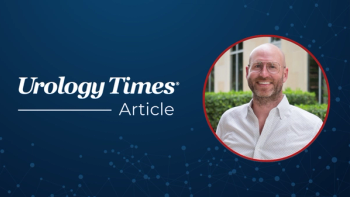
In this episode, Jason Hafron, MD, explains how data-driven pathways and patient follow-up systems can improve quality and outcomes in urologic oncology.
Welcome back to
In this episode of The UroOnc Minute, host Adam B. Weiner, MD, is joined by Jason M. Hafron, MD, CMO, chief medical officer of the Michigan Institute of Urology and an affiliate of Urology Alliance, to discuss a challenge shared by nearly every urologic oncology practice: ensuring patients remain engaged in long-term follow-up. Whether monitoring patients on active surveillance for prostate cancer or small renal masses or conducting surveillance after definitive treatment, Hafron explains that consistent follow-up is essential for optimizing oncologic outcomes and requires much more than simply scheduling the next appointment.
Hafron outlines how his large multispecialty practice has addressed this challenge by developing standardized clinical pathways that translate broad guideline recommendations into consistent expectations for patient care. Beyond creating pathways, he emphasizes the importance of building systems that ensure they are followed. By leveraging analytics platforms, nurse navigators, and dedicated support staff, the practice can identify patients who have missed laboratory testing or follow-up visits, proactively reconnect them with care, and reduce the likelihood that patients fall through the cracks.
The conversation also highlights the role of performance measurement in driving practice improvement. Drawing on lessons learned from the Michigan Urological Surgery Improvement Collaborative, Hafron discusses how physician-level data can be used constructively to identify care gaps, reinforce evidence-based practices, and foster a culture of continuous quality improvement. Rather than using metrics punitively, his team provides individualized, supportive feedback, helping clinicians better understand their practice patterns and align care with established pathways.
Looking ahead, Hafron describes how large-scale clinical data can do more than monitor adherence: They can also refine the pathways themselves. As practices accumulate long-term outcomes across thousands of patients, they gain opportunities to evaluate whether existing surveillance protocols truly optimize care and to adjust them based on real-world evidence. Together, Weiner and Hafron underscore how standardized workflows, data-driven quality initiatives, and collaborative learning can improve patient outcomes while making urologic oncology care more efficient and sustainable.