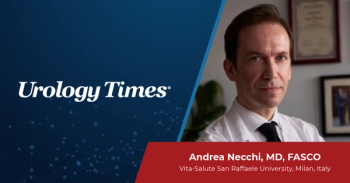
Andrea Necchi, MD, discusses how results from the CA017-078 trials compares with other perioperative immunotherapy trials in muscle-invasive bladder cancer.
Wesley Hauwei Chou, MD, outlined 2 projects evaluating potential biomarkers for treatment response in renal cell carcinoma.
In an interview at the 2026 Desai Sethi Urology Institute Urology on the Beach conference, Wesley Hauwei Chou, MD, outlined 2 projects evaluating potential biomarkers that could predict response to immune checkpoint blockade in renal cell carcinoma (RCC). Predicting response to immunotherapy in RCC has historically been very challenging, as more traditional biomarkers such as ctDNA, tumor mutational burden, and PD-L1 haven’t shown the ability to stratify outcomes well.
To that end, Chou and his colleagues sought to characterize gene expression changes in RCC across different treatment contexts. Chou is a fourth-year urology resident at Oregon Health & Science University in Portland, Oregon.
One arm of the work focused on clear cell RCC organoids treated with the tyrosine kinase inhibitor cabozantinib, using single-cell transcriptomic analysis to identify genes that were differentially expressed after exposure to treatment. Among several signals observed, one gene—LRRC75A—emerged as particularly notable, showing marked upregulation in cabozantinib-treated organoids. Although LRRC75A has not been well studied in RCC, prior data in mesenchymal stem cells suggest a role in regulating VEGF secretion under hypoxic conditions, raising intriguing questions about potential compensatory angiogenic mechanisms in clear cell disease.
A second arm of the study examined patients with stage 3 RCC, a high-risk population in which the benefit of adjuvant or perioperative immune checkpoint blockade remains uncertain. The investigators performed protein and RNA expression analyses on tumor samples from 19 patients, comparing those who received immune checkpoint inhibition around the time of surgery with those who did not. Overall, tumors exposed to immunotherapy demonstrated increased immune cell activation; however, recurrence still occurred in most of these patients, underscoring the complexity of treatment response in this setting. Exploratory analyses identified a 4-gene signature—GZMA, GZMK, ITGAL, and IL7R—that showed promise in predicting outcomes and was subsequently applied across additional cohorts to assess associations with overall survival.
Looking ahead, Chou outlined several next steps for this work. Further in vitro studies are planned to better understand the functional role of LRRC75A and whether its upregulation directly contributes to angiogenic escape mechanisms in clear cell RCC. In parallel, the team aims to expand analyses in the stage 3 population and validate the 4-gene signature in larger, well-characterized clinical trial cohorts, with the goal of improving prognostic tools and better identifying patients most likely to benefit from perioperative immunotherapy.
REFERENCE
1. Chou WH. Investigating biomarkers for predicting response to immune checkpoint blockade in renal cell carcinomas. Presented at: Urology on the Beach 2026. January 16-18, 2026. Miami Beach, Florida.