
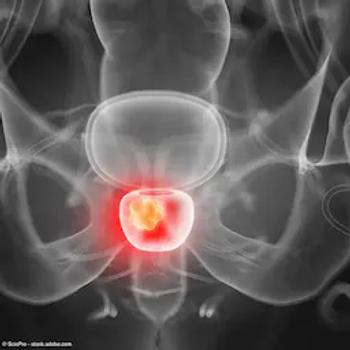
"For every 1 unit increase in whole body tumor SUVmean, there was a 12% decrease in the risk of an rPFS event and a 10% decrease in the risk of death," says Phillip H. Kuo, MD, PhD, FACR.
"For every 1 unit increase in whole body tumor SUVmean, there was a 12% decrease in the risk of an rPFS event and a 10% decrease in the risk of death," says Phillip H. Kuo, MD, PhD, FACR.
"I think a take-home message there is that in the prostate/prostate bed, you have to take extra time and caution in reading that region," says Phillip H. Kuo, MD, PhD.

This article features insights from Phillip Kuo, MD, PhD, and Andre Abreu, MD, on gallium 68 PSMA-targeted PET imaging in prostate cancer.
Andre Abreu, MD, and Phillip Kuo, MD, PhD, on future use of PSMA targeted therapy, including insight on the phase 3 VISION trial, which used 68Ga-PSMA-11 PET/CT to identify patients for targeted treatment with 177Lu-PSMA-617.
The FDA’s approval of Ga-68 PSMA-11 and its impact on ensuring accessibility of generator versus cyclotron for new radiotracers is discussed from a nuclear medicine perspective.

Phillip Kuo, MD, PhD, reviews the sensitivity of PSMA (prostate-specific membrane antigen) PET (positron emission tomography) scans compared to conventional imaging.

Andre Abreu, MD, discusses the rationale behind targeting PSMA (prostate-specific membrane antigen) and its impact on the patient journey from diagnosis to biochemical recurrence.

The history and resultant benefits of PET (positron emission tomography) along with the utilization of PSMA (prostate-specific membrane antigen) PET imaging in treating prostate cancer is discussed.
Andre Abreu, MD, and Phillip Kuo, MD, PhD, define the standard of care and the limitations in prostate cancer imaging.