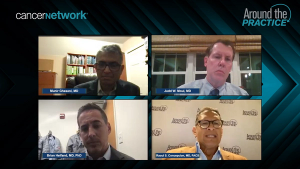
"What exactly is precision medicine?...One of the original [LUGPA] board members put it very simply: cheaper, faster, and better," writes Raoul S. Concepcion, MD, FACS.
"What exactly is precision medicine?...One of the original [LUGPA] board members put it very simply: cheaper, faster, and better," writes Raoul S. Concepcion, MD, FACS.
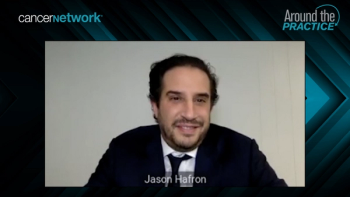
Jason M. Hafron, MD, CMO, and Oliver Sartor, MD, share their approach for the optimal management of mCRPC through genetic testing.

Daniel P. Petrylak, MD, leads the discussion on sequencing treatment for a patient with mCRPC, such as in case 2, who progresses on docetaxel therapy.
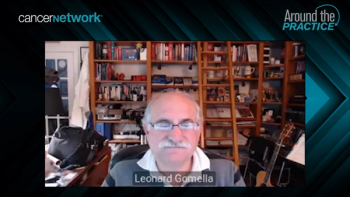
Prostate cancer experts review the use of PSMA PET/CT imaging and Axumin imaging for patients with metastatic castration-resistant prostate cancer.

Raoul S. Concepcion, MD, presents the case of a 64-year-old-man with mCRPC, and Jason M. Hafron, MD, CMO, leads the discussion on the optimal treatment approach for the given case.

"The explosion in the number of therapies in this particular disease segment, especially those that have been deemed BCG unresponsive, seems very reminiscent to that witnessed in the mCRPC space a decade ago," writes Raoul S. Concepcion, MD, FACS.
Daniel P. Petrylak, MD, leads the discussion on approaching treatment of high-volume metastatic castration-naïve prostate cancer.
A panel of experts in prostate cancer examine the use of conventional imaging and PSMA PET/CT and the impact on their approach to the management of mCNPC.

Dr Raoul S. Concepcion presents the case of a 69-year-old man with metastatic castration-naïve prostate cancer (mCNPC), and the panel shares their personal approaches to treatment.
Raoul S. Concepcion, MD, FACS, poses polling questions for the audience’s medical specialty and the percent of patients they receive with prostate cancer.

"The major shift for many urologists over the past 10 years has undoubtedly been the understanding of how to treat advanced prostate cancer," writes Raoul S. Concepcion, MD, FACS.

"As someone once told me, if you make a change in your golf swing and it is easy, more than likely you have not changed anything," writes Raoul S. Concepcion, MD, FACS.

Dr Raoul Concepcion leads a multidisciplinary expert panel in a discussion about the challenges of long-term follow-up of prostate cancer in patients with negative bone/CT but positive molecular indicators of recurrence.

Dr Munir Ghesani reviews and comments on data regarding the sensitivity of imaging modalities in detecting biochemical recurrence in prostate cancer.
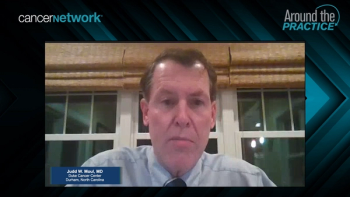
Dr Raoul Concepcion leads a panel discussion on a case of a 64-year-old man with multifocal prostate cancer treated with IMRT who refused ADT.
Munir Ghesani, MD, an expert in nuclear medicine, describes the factors that differentiate available tracers and provides guidance on tracer selection.

An expert panel reacts to polling data on choice of imaging modalities for patients with prostate patients after definitive therapy and share their insights about best practices.

Raoul Concepcion, MD, presents the case of a 58-year-old man who had a radical prostatectomy 6 months prior and discusses how aspects of the case influence treatment selection.

Experts in prostate cancer discuss considerations for initiating ADT therapy after definitive treatment in patients with prostate cancer in the context of biochemical recurrence.
Brian Helfand, MD, PhD, describes the ways in which the PSA nadir can be defined after definitive therapy and the implications of the definition used for patients with prostate cancer.
Dr Judd Moul and colleagues discuss best practices for monitoring patients with prostate cancer after definitive therapy.
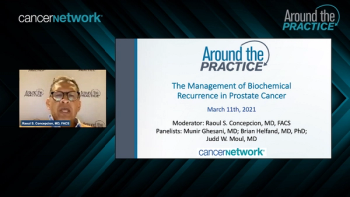
Dr Raoul Concepcion leads a panel of experts in prostate cancer in setting the stage for case-based discussions of biochemical recurrence.

November 26th 2021

December 9th 2021

August 25th 2021
December 2nd 2021
December 9th 2021