

Campbell emphasized that although gender representation in medicine is shifting, structural and cultural biases continue to influence academic recognition.
Campbell emphasized that although gender representation in medicine is shifting, structural and cultural biases continue to influence academic recognition.

Overall, 59% of patients achieved at least a 50% decline in PSA level.

This year's meeting with feature several notable sessions in prostate cancer, bladder cancer, kidney cancer, and other GU malignancies.

The company plans to submit a Biologics License Application to the FDA at the end of 2026.

Further follow-up and additional treatments in the study are ongoing.

The approvals are supported by findings from the phase 3 CheckMate-67T trial.

These data are intended to support a new drug application to the FDA in the second half of 2025.

The single-use test can deliver diagnostic results for chlamydia and gonorrhea in approximately 30 minutes.

However, the data did not show any benefit of a docetaxel doublet vs an ARPI doublet.

Jonathan Rubenstein, MD, and Mark Painter tackle a coding question for treating stones.

James C. Ulchaker, MD, shares his insights on the current range of BPH therapies.
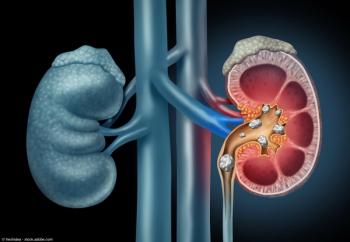
Jared S. Winoker, MD, addresses the wide range of stone burdens treated by the CVAC system for the study.
The application is seeking an expanded indication of talazoparib plus enzalutamide for mCRPC.
The committee voted 4-5 in opposition of a favorable benefit-risk profile.
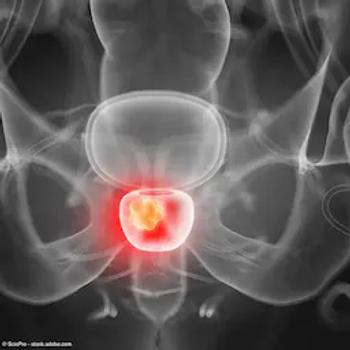
Results from the phase 3 AMPLIFY trial are intended to support an application to the FDA for potential approval of 64Cu-SAR-bisPSMA.
The phase 3 study design will now be submitted for final review by the agency.

The study found differences in genomic alteration frequencies between non-Hispanic Black and non-Hispanic White veterans with metastatic prostate cancer, but showed similar survival outcomes.

The bladder transplant procedure involved a collaboration between the University of California, Los Angeles and the University of Southern California.
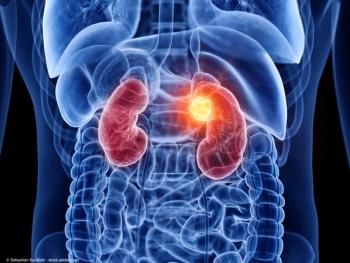
"Appropriate patient selection for CN is a highly individualized process that is improved with a multidisciplinary approach," write the authors.

Explore the latest insights on testosterone therapy, its benefits, and practical applications from leading urologists in men's health.

Data from the SCIMITAR trial showed that SBRT appeared safe and demonstrated comparable PROs compared with CFRT.

The CELLEBRATE trial is aiming to provide additional evidence to support the safety and efficacy of iltamiocel.
Professor Andreas Skolarikos shares his experience with the LithoVue Elite System.

"The use of telemedicine is heavily dependent on supportive legislature," write Tracey L. Krupski, MD, and Jeunice Owens-Walton, MD.

Yōni.Fit bladder support was granted FDA 510(k) clearance in May 2024.
ACOU085 will be administered in 1 ear, with a matching placebo injection in the respective contralateral middle ear.
The freedom from re-intervention rate was 71%.
Use of focal therapy was shown to prolong the duration of active surveillance.

"I’m hopeful because women in urology are no longer an exception—they’re becoming the norm," says Shaya Taghechian, MD.
The phase 3 RC48-C016 trial met its primary end points.