

The 52-week study plans to enroll 16 patients across 4 sites in the US.
The 52-week study plans to enroll 16 patients across 4 sites in the US.
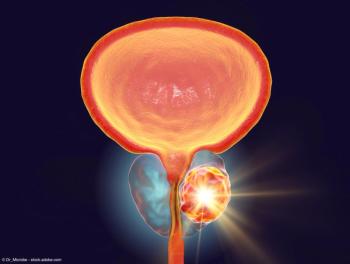
The mean absorbed radiation dose to tumors was 8.9 Gy/GBq, compared with 0.27 Gy/GBq in the kidneys and 0.13 Gy/GBq in the salivary glands.
There are also 60 sites in the process of launching the EAP.

The method involves local delivery of the antibiotic gentamicin directly into the bladder tissue.

This bill would cut funds for research projects in disease states such as prostate cancer, bladder cancer, kidney cancer, and interstitial cystitis.

"The findings from this study will help us understand sunobinop’s potential as a possible new treatment option for this chronic disorder,” said Craig Landau, MD.

The goal of the trial is to improve quality of life by identifying patients who can safely reduce or avoid treatment with hormone therapy.
"Considering that almost all patients in the combined treatment group achieved testosterone recovery at 1 year, the results support that this short term (intermittent) combined approach is an optimal option in selected patients with metachronous oligorecurrent hormone-sensitive prostate cancer," the authors wrote.

“Five years after telehealth suddenly became a routine part of care for most Americans, we show that it has not led to runaway utilization or spending. This kind of in-depth analysis can inform its future," says Chad Ellimoottil, MD, MS.
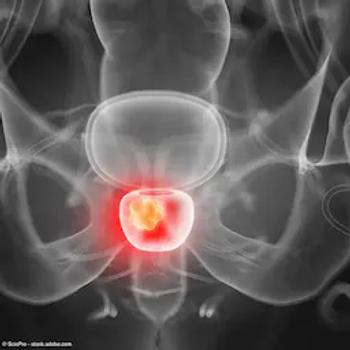
The detection rate ranged from 44% to 58% on day 0 and 58% to 80% on day 1.

“What we hope overall is that this is a biological study that might inform therapeutic development for this disease,” says David A. Braun, MD, PhD.
The safety review committee recommended that the phase 2 portion proceed with the 8 GBq dose.
The average life expectancy was 80.3 years among men with a total motile sperm count over 120 million, compared with 77.6 years among men with a total motile sperm count ranging from >0 to 5 million.

The ARID II trial is assessing the safety and effectiveness of the device in men who are scheduled to undergo robotic-assisted radical prostatectomy.
The median OS was 34 months with 177Lu-PSMA-617 plus enzalutamide compared with 26 months with enzalutamide alone.
The FDA is requiring a warning about increased blood pressure and is recommending that the black box warning related to the increased risk of adverse cardiovascular events be removed.
A recap of the FDA submissions and regulatory decisions in urology from February 2025.

Overall, 84.2% of patients achieved a 50% or greater reduction in urgent leaks.

The updates emphasize a risk-stratified approach to the management of microhematuria.

"For telephone-only (audio only) visits, Medicare has officially stated that such a visit would be considered the same as an in-person visit, with a few qualifications," write Jonathan Rubenstein, MD, and Mark Painter.

Data from the VAPOR 2 trial are intended to support a submission to the FDA for 510(k) clearance of the device.
The PDUFA date is August 27, 2025.
"At ASCO GU, we presented the final analysis of the study, which confirmed the superiority of a combination over the TKI monotherapy in terms of both progression-free survival as well as overall survival," says Camillo Porta, MD.
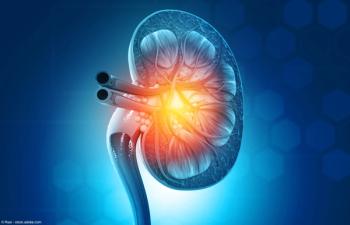
YOLT-203 was granted an Orphan Drug Designation and a Rare Pediatric Disease Designation in September 2024.

Myriad is planning to launch its first AI-driven prostate cancer clinical test later this year.
The trial plans to enroll up to 80 adult patients with mCRPC who have progressed on prior systemic therapies.
The pCR rate was 33% with APL-1202 plus tislelizumab compared with 26% with tislelizumab alone.
Total detection rate was 36% (13/36) in the ultralow PSA group and 51% (47/93) in the low-PSA group.
"Sometimes, there is more than a single answer to a question; this certainly applies to patients with benign prostatic disease," writes Gopal H. Badlani, MD.
Robert J. Motzer, MD, reported that median PFS was 16.4 months in the nivolumab plus cabozantinib arm (95% CI, 12.5-19.3) vs 8.3 months in the sunitinib arm (95% CI, 7.0-9.7) (HR=0.58, 95% CI, 0.49-0.70).