
Data indicated that the test preferentially detected high-grade, clinically significant prostate cancer, with 93% of detected cancers being GG3-5 and 67% being stage 3 or 4.
Data indicated that the test preferentially detected high-grade, clinically significant prostate cancer, with 93% of detected cancers being GG3-5 and 67% being stage 3 or 4.
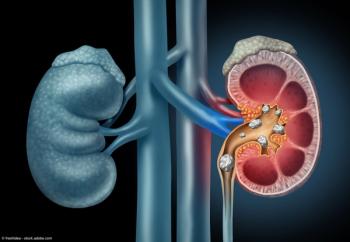
In total, 8 of 40 patients who underwent ultrasonic propulsion experienced relapse, compared with 21 of 42 patients who underwent observation.

"A surprise finding was the increase in opioid fulfillment beyond the 7-day postoperative period, which was really unexpected," says Laura Gressler, MS, PhD.

Over 12 weeks, the average reduction in total UI frequency was 2.3 episodes per day among those in the pelvic yoga program compared with 1.9 episodes per day among those in the general physical conditioning program.

The approval is based on findings from the first interim analysis of the phase 3 EV-302 trial.

There were no differences in the number of treatment-related TEAEs in patients who received sildenafil cream vs patients who received placebo.
“What this means for patients is that thiazides remain an important option in the toolkit for preventing kidney stone recurrence,” says Ryan S. Hsi, MD, FACS.
The phase 3 trial will assess the anti-tumor activity of 9MW2821 plus toripalimab vs chemotherapy in patients with locally advanced or metastatic urothelial carcinoma.

"Generative AI technologies may play a valuable role in providing prompt, accurate responses to routine patient questions––potentially alleviating patients' concerns while freeing up clinic time and resources to address other complex tasks," says Michael Scott, MD.
In total, the trial plans to enroll 7 patients with PH1 through a single center in China.
The approval is supported by data from cohort 1 of the phase 3 THOR trial.

"Donor-advised funds are a fast-growing charitable giving vehicle in the US because they are one of the easiest and most tax-advantageous ways to give to charity," writes Jeff Witz, CFP.
The approval is supported by findings from the phase 3 EV-302 trial.
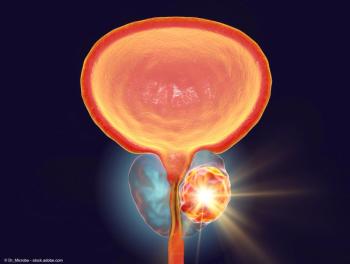
“This study is a breakthrough because it is the first trial to show that a non-hormonal drug can induce durable complete remissions in recurrent prostate cancer patients with BRCA2 mutations—one of the most aggressive subtypes of this disease,” says Emmanuel S. Antonarakis, MD.

The fast track designation for 64Cu-SAR-bisPSMA is supported by findings from Clarity’s ongoing clinical program for the imaging agent.
“In the highly selected patient with localized MIBC, an organ-preserving approach to treatment may produce similar oncologic outcomes to radical surgery with a potential for improved QoL, although there is currently insufficient evidence to recommend bladder preservation therapy as a standard of care," the authors write.
Any stone fragmentation was achieved in 88% of patients.
A full market release of the HYDROS System is expected within the current quarter.

"Early-career physicians should ask themselves whether they really need to purchase a home right away or whether they would be better served renting for a few years," writes Jeff Witz, CFP.
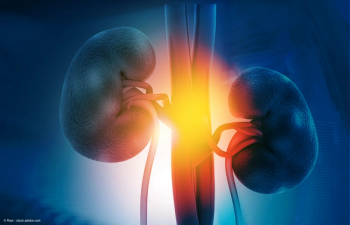
"Overall, we found that patients with recurrent RCC following adjuvant IO continued to have responses to different types of first-line systemic therapy," says Talal El Zarif, MD.
The approval for enfortumab vedotin is supported by findings from the global phase 3 EV-301 trial and the phase 2 EV-203 bridging trial in Chinese patients.
"The great news is that we have now completed recruitment. We actually recruited more than 1700 patients," says Kari A.O. Tikkinen, MD, PhD.
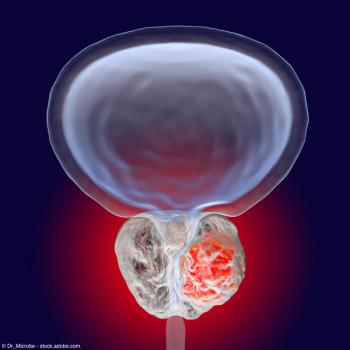
The phase 1 trial is assessing the safety and tolerability of MOMA-313 as both a monotherapy and in combination with olaparib in patients with HR-deficient advanced or metastatic solid tumors.

"But here at IU, we have an experimental protocol that's open that's called testicular tissue cryopreservation, and it's a collaboration with UPMC," says Amanda J. Saraf, DO.
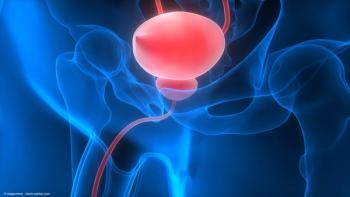
William Tabayoyong, MD, PhD, highlights the University of Rochester’s upcoming Bladder Cancer Symposium, which will take place on September 14, 2024.

"The updated guideline includes numerous new, important recommendations that will enhance the ability of urologists to provide optimal, state-of-the-art care for infertile males,” says Robert E. Brannigan, MD.
"Combining PRIMARY and PI-RADS scores could be a game-changer in how prostate cancer is diagnosed," says Louise Emmett, MBChB, FRACP, MD.
Per Kaplan-Meier estimates, 95.6% of patients who underwent SURE were free of health care consumption events by 12 months, compared with 83.5% of patients who underwent URS.
“The challenge now is to understand how these key aspects of mitochondrial metabolism become activated, why they stimulate metastasis, and whether we can safely block them,” says Ralph J. DeBerardinis, MD, PhD.
The NDA for UGN-102 is primarily supported by findings from the phase 3 ENVISION trial.