
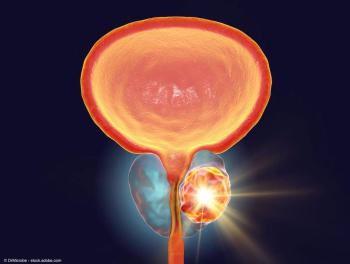
The research projects are assessing combination therapies in advanced prostate cancer that include the use of relugolix.
The research projects are assessing combination therapies in advanced prostate cancer that include the use of relugolix.

"Keeping up-to-date is challenging, and rapid progress that is now occurring in our field is truly amazing," writes Michael S. Cookson, MD, MMHC, FACS.
"ctDNA holds a unique position as it offers a molecular means to quantify the extent of residual disease burden," says Adanma Ayanambakkam, MD.

"If a patient begins treatment with platinum-based chemotherapy and maintenance immune checkpoint inhibition, second-line options may involve evaluating erdafitinib, ADCs, or participation in clinical trials," says Adanma Ayanambakkam, MD.

An exclusive Urology Times survey measured US-based urologists’ uptake, access to, and indications for utilizing prostate-specific membrane antigen-targeting agents.
"Despite challenges, ongoing research and advancements in risk stratification, imaging techniques, and targeted therapies are paving the way for personalized and precision medicine approaches in prostate cancer management," writes Michael S. Cookson, MD, MMHC, FACS.
Kelly L. Stratton, MD, FACS, recaps several presentations on prostate cancer from the 2023 American Urological Association Annual Meeting in Chicago, Illinois.
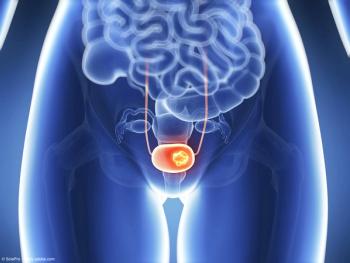
"We anticipate that in the next decade, breakthroughs in genetic profiling of tumors for precision therapies will further reduce suffering and death from bladder cancer," writes Michael S. Cookson, MD, MMHC.
Michael S. Cookson, MD, MMHC, highlights 5 studies in prostate cancer being presented at the 2023 American Urological Association Annual Meeting.

Urologists weigh in on the challenges associated with whether, when, and how to treat these patients with prostate cancer.

"AI has...been increasingly utilized in the field of medicine, including cancer research, because of its potential to improve diagnostic accuracy, prognosis prediction, and personalized treatment planning," writes Michael S. Cookson, MD, MMHC.
"This trial did not require a biomarker for entry in, so patients were treated with combination therapy or standard care, which would have been the abiraterone alone, to see if there was a benefit," says Michael S. Cookson, MD, MMHC.

“We need to do better, and men in America deserve a better chance at long-term, good outcomes from their prostate cancer discovery,” says Michael S. Cookson, MD, MMHC.

"We are...entering a new era for patients with urologic malignancies. Furthermore, we are expanding our reach and influence in patient care designed to improve outcomes," writes Michael S. Cookson, MD, MMHC.
“The takeaway from that talk was that it's critically important to review drug plan options, particularly if the patient's on a high-cost drug,” says Kelly L. Stratton, MD, FACS.
“[The 2022 Huggins Medal Lecture from Harry Herr, MD] was a fascinating talk, and something that I think anyone could learn from,” says Kelly L. Stratton, MD, FACS.

“I think [it was a] great opportunity to catch up on what is going on with PSMA-PET and theranostics and then also understand that that landscape will change over the near future,” says Kelly L. Stratton, MD, FACS.
“It's very interesting to see how this continues to progress as a field,” says Kelly L. Stratton, MD FACS.
"Cancer doesn’t take a holiday or vacation, and it doesn’t care about a pandemic. Our efforts to reduce deaths from prostate cancer through screening and early detection must continue," writes Michael S. Cookson, MD, MMHC.
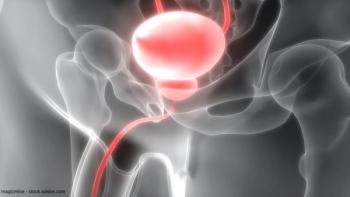
In this interview, Sanjay Patel, MD, discusses blue light cystoscopy for the detection of bladder cancer.

“There are numerous trials that say that if you use blue light cystoscopy, in about 25% of patients, it will help you pick up a tumor you otherwise would have missed with traditional white light cystoscopy,” says Sanjay Patel, MD.

"What we still need to trial is the use of treatment intensification or triple therapy in men with high-risk localized and/or locally advanced disease," writes Michael S. Cookson, MD, MMHC.
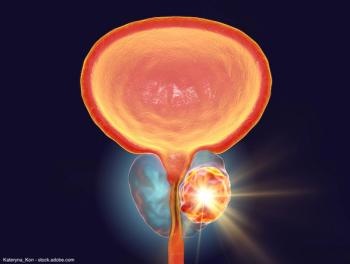
"As we celebrate 50 years of successes, the Gleason grading system deserves recognition," writes Michael S. Cookson, MD, MMHC.
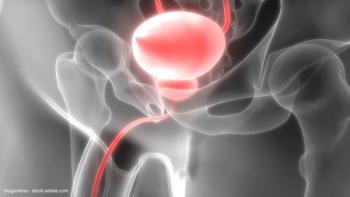
"The future is bright for immunotherapy in bladder cancer," writes Michael S. Cookson, MD, MMHC.

"As we celebrate the tremendous victories against cancer and commemorate 5 decades of progress, we are also reminded of the harsh reality that we have a war still to be won," writes Michael S. Cookson, MD, MMHC, co–editor in chief of Urology Times.

"The Will Rogers phenomenon continues to be impactful, and when combined with a precision treatment, the outcomes of this disease state will be “doubly improved” for generations to come," writes Michael S. Cookson, MD, MMHC.
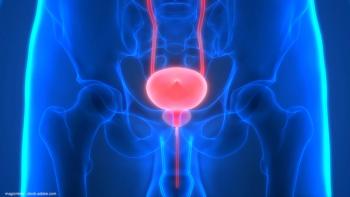
"After a long period of stagnation and inertia, the bladder cancer space is alive and full of innovation and activation," writes Michael S. Cookson, MD, MMHC.