

“There will always be changes. I'm entering my fourth cycle of recertification, and I can tell you that none of the 3 prior cycles were similar,” says David Joseph, MD.
“There will always be changes. I'm entering my fourth cycle of recertification, and I can tell you that none of the 3 prior cycles were similar,” says David Joseph, MD.

“We are seeing responses,” says Tanya Dorff, MD.

“Guidelines are not a rulebook; they're a framework for how to think about a particular disease,” says Edward M. Schaeffer, MD, PhD.

"I think that for patients that have high-risk features after cystectomy, they absolutely should be on nivolumab. I don't think that's a controversial statement anymore," says Benjamin J. Davies, MD.
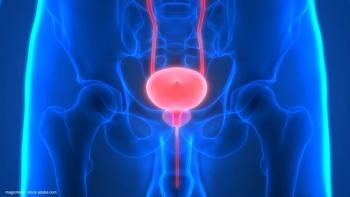
The analysis showed promising signs of clinical activity with cabazitaxel/gemcitabine plus pembrolizumab in patients with docetaxel-unresponsive non-muscle invasive urothelial carcinoma of the upper and lower urinary tracts.

Amy N. Luckenbaugh, MD, recaps 5 presentations from the 2022 American Society of Clinical Oncology Annual Meeting.

“The real-world data suggest that the use of tumor sequencing is definitely suboptimal,” says Pedro C. Barata, MD, MSc.

“We…feel that this is going to be very helpful to the diplomate as far as improving their knowledge base,” says David Joseph, MD.

“Pregnant women have not been part of the vaccine clinical trials, but the CDC reported that there have been more than 150,000 women who got the vaccine while they were pregnant and there were absolutely no adverse effects,” says Hossein Sadeghi-Nejad, MD.
In the second video interview of the series, Sandip M. Prasad, MD, MPhil, reflects on the role of radical nephroureterectomy and endoscopic resection in patients with high- or low-grade UTUC and highlights clinical experience with kidney-sparing approaches including the use of mitomycin gel.

“There are numerous trials that say that if you use blue light cystoscopy, in about 25% of patients, it will help you pick up a tumor you otherwise would have missed with traditional white light cystoscopy,” says Sanjay Patel, MD.

William J. Catalona, MD, explains how the approach of active surveillance in prostate cancer emerged alongside the advent of PSA screening.

“About three-quarters of urologists reported barriers to professional success,” says Christina Shin.

Sam S. Chang, MD, MBA, recaps 5 presentations from the 2022 American Society of Clinical Oncology Annual Meeting.
“What was published in May of 2022 was version 4 of the 2022 guidelines,” says Edward M. Schaeffer, MD, PhD.

“I think most panelists are happy to participate in those meetings, because generally speaking, those ad hoc meetings are done because there's a new advance in the field,” says Edward M. Schaeffer, MD, PhD.

“To have at the 2-year mark basically half the patients still without evidence of disease is really a step forward,” says Sam S. Chang, MD, MBA.

“What’s really exciting over the next few years is how are these antibody-drug conjugates that are already FDA-approved going to partner with other current drugs that we can use to treat this disease, such as immunotherapy,” says Garmezy.

“Our ability to develop innovative technologies and approaches continues to evolve. We have newer molecular profiling techniques that are being applied to urine at the moment,” says Simpa Salami, MD, MPH.
"A key overarching question is whether there is just a higher burden/stage of disease “beyond which we don’t think a bladder preservation is likely to provide durable disease control,” says Neil Desai, MD.

“We recognize that we now have tools we didn't previously have that allow us to make some major changes,” says David Joseph, MD.
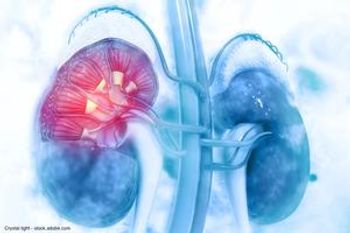
“One of the processes that is regulated by HIF2α is angiogenesis,” says James Brugarolas, MD, PhD.
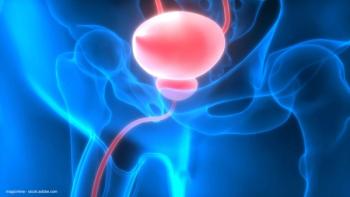
“There has been a ton of activity in recent years with new FDA approvals,” says Benjamin Garmezy, MD.

“Your best bladder is the one you were born with,” says Neil Desai, MD.

“Patients who really need to be screened are not getting screened,” says Ram Pathak, MD.
Understanding the mechanisms of treatment resistance is among the areas of unmet need, says James Brugarolas, MD, PhD.
Tivozanib (Fotivda) is approved by the FDA for the treatment of adult patients with relapsed or refractory advanced renal cell carcinoma who have received 2 or more prior systemic therapies.

“It’s important for men to be aware that there are scientific mechanisms through which COVID-19 can affect male sexual function and male reproductive function," says Hossein Sadeghi-Nejad, MD.
“The implications of the findings are that the SUI literature is, perhaps, not as good as it could be, but there’s hope,” says Eric S. Rovner, MD.
Antegrade mitomycin gel instillation was done through a percutaneous nephrostomy tube.