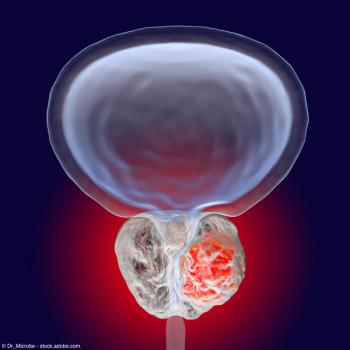
Experts close their discussion by highlighting the future landscape of PSMA-targeted imaging in the management of prostate cancer.

Experts close their discussion by highlighting the future landscape of PSMA-targeted imaging in the management of prostate cancer.

"We definitely need women to be able to access care quickly and efficiently. But, putting antibiotics at the forefront is not going to be the answer," says Caroline Dowling, MBBS, MS, FRACS (Urol).


"The happier you are in your personal life, I think, the better you are as a doctor, and the better you are as a doctor, the better you can be in your personal life," says Anne M. Suskind, MD, MS, FACS, FPMRS.

"There's fear that telehealth is going to be abused and overused, and the evidence doesn't necessarily point to that, but because of that fear, it does hold things back," says Chad Ellimoottil, MD, MS.

"Talking about the variety that's out there, the lack of regulation, and having things that are independently verified by labs can also enhance the patient outcome," says Bilal Chughtai, MD.

"There are patients who are not able to be submitted to an MRI due to metallic artifacts or to some conditions that are not compatible with the performance of an MRI," says Leonardo Kayat Bittencourt, MD, PhD.

"We're really enthusiastic on the overactive bladder end and on the antibiotic resistance end, but much more broadly, [AI is] set up to help us counsel our patients better and help us to improve outcomes for our patients as well," says Glenn T. Werneburg, MD, PhD.

"This a fantastic meeting that I really look forward to," says Nazih Paul Khater, MD, FACS.

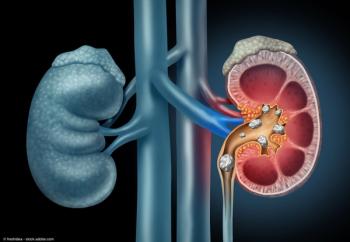
"In fact, on multivariate analysis, they wanted to look at other health concerns that raise people's risk of getting kidney stones and the 3 things that came up from the study where the history of gallstones, hypertension, and chronic kidney disease," says Ben H. Chew, MD, MSc, FRCSC.

"Some of it actually is self-selecting because people are hearing about it more and come in asking about it first," says Brian Friel, MD.

In this insightful episode, Dr. Kennelly engages with Dr. Eilber and Dr. Benson in a comprehensive discussion of sacral neuromodulation and transcutaneous and posterior tibial nerve stimulation therapies used in the treatment of OAB, including their mechanisms, patient reception of FDA-approved devices, overall evolution and current practices implementation in clinical settings.

Dr. Kennelly, Dr. Kevin Benson, and Dr. Karyn Eilber share their experiences in the use of intravesical botulinum toxin type A as a treatment option for overactive bladder (OAB) into treatment plans. They provide insight into identifying optimal candidates, the outcomes they have observed, and benefits and risks, including strategies for managing these risks. They explore the decision-making process in guiding patients through various treatment options, considering individual lifestyles and preferences.

Drs Helfand, Chapin, and Collins, review the case of 67-year-old man treated with recurring prostate cancer.

Clinical oncologists present the case of a 62-year-old man with recurrent prostate cancer.

“One of those gigs was the New York section of the AUA, we did a fundraising event, which was a battle of the bands with 2 other urology departments that had bands as well,” says Debra Fromer, MD.

"I don't think 1 database study creates dogma, but I do think we can share these data with our patients and talk to them about treatment options and risk, have that difficult conversation about how BMI may be associated with that risk," says Cassandra K. Kisby, MD, MS.

"If payments are cut, our overall cost per visit goes up, which could be another disincentive to use virtual care," says Chad Ellimoottil, MD, MS.

“Our conclusion was that the amount of pattern 3 in men with grade groups 2, 3, and 4 is not predictive of oncologic outcome once you know the amount of 4,” says Andrew J. Vickers, PhD.

"What we found was that we were able to identify patients who responded vs didn't respond to the treatment with a high degree of accuracy," says Glenn T. Werneburg, MD, PhD.

"We're going to look at whether that difference in the protocol has clinically meaningful implications, such as are patients who receive antibiotic prophylaxis at higher risk of developing resistance in the future?" says Badar M. Mian, MD.

"I emphasized the fact that the use of ultrasound is very important and should be done on every single case," says Nazih Paul Khater, MD, FACS.

“But all in all, one thing we did see was that [with] the data for saw palmetto, there was a signal that does seem promising, especially when used in combination with other agents,” says Bilal Chughtai, MD.

"The biggest finding was that the guys lost the weight. They lost 5.5% of their body weight," says Jill M. Hamilton Reeves, PhD, RD, CSO.

"The most important thing that I think came out of this study is really the BMI inflection point for complications. We saw an abrupt rise in complications around a BMI of 40," says Cassandra K. Kisby, MD, MS.

“We don't have the sex therapists or psychologists who specialize in sexual dysfunction here... It's incredibly important, because if it doesn't start out as psychological, certainly, it becomes psychological, at least in some measure,” says Thomas M. Jaffe, MD.

Experts in prostate cancer evaluate the data from the SPOTLIGHT trial and the use of 18F-rhPSMA-7.3 for prostate cancer.

A panel of experts introduce the SPOTLIGHT study, evaluating PSMA PET in patients with prostate cancer.

"I would say that the biggest take-home is that many of our patients are using social media for their health care information, and this may influence their preferences [and] their decision-making," says Alexandra Tabakin, MD.

"The learning curve is fairly quick; you can pick this up pretty easily vs some of the other prostate procedures that can take a little bit more time to learn how to use," says Matthew E. Sterling, MD.