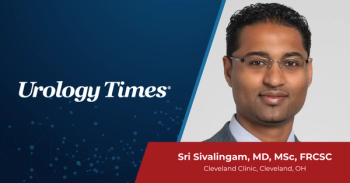
Sri Sivalingam, MD, discusses how suction-based technologies are improving stone clearance and raising expectations for ureteroscopic stone treatment.

Krambeck pointed to the growing importance of medical management in stone disease prevention.
In this video, Amy E. Krambeck, MD, a professor of urology at the Northwestern University Feinberg School of Medicine in Chicago, Illinois, highlighted several key trends shaping the future of endourology she observed at the 2025 World Congress of Endourology and Uro-Technology. She emphasized the central role of artificial intelligence and robotics, noting that these technologies are moving beyond traditional robotic surgery into endoscopic applications. She anticipates that integrated systems capable of monitoring heat, pressure, and flow during procedures will soon enhance both safety and precision in stone management.
Krambeck also pointed to the growing importance of medical management in stone disease prevention. She noted that GLP-1 receptor agonists and other diabetes and weight loss medications show promise in reducing stone formation, potentially transforming long-term prevention strategies for recurrent stone formers.
A major area of excitement involves advances in ureteroscopy. Traditional ureteroscopic stone management often required time-intensive fragment retrieval using baskets, with smaller fragments left to pass spontaneously. Krambeck highlighted the emergence of flexible, navigable suction ureteral access sheaths, which have streamlined this process. These devices allow placement of the sheath directly into the kidney, where stones are fragmented with a laser and debris is immediately suctioned out. This reduces the need for baskets, shortens operative times, and improves stone clearance efficiency. She said she believes this innovation will reduce reliance on percutaneous stone procedures by making ureteroscopy more effective and comprehensive.
Finally, Krambeck underscored the ongoing need to refine understanding of laser safety in endourology. Although lasers have been used for decades, recent focus on mitigating thermal and pressure effects is driving improvements in procedural safety.
Overall, she expressed optimism about the rapid pace of technological advancement, predicting that the next 2 to 5 years will bring significant innovation in endourology. She described it as an exciting time to practice, with major improvements on the horizon for both physicians and patients.