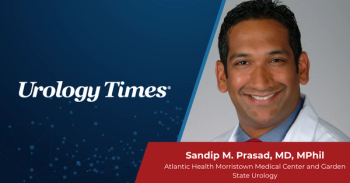
Sandip M. Prasad, MD, MPhil, discusses the safety profile of mitomycin intravesical solution, including common adverse events and patient counseling during chemoablation for NMIBC.
Armine K. Smith, MD, discusses the importance of integrating sexual health into bladder cancer care, including proactive counseling, preservation strategies, and multidisciplinary support.
In this video, Armine K. Smith, MD, discusses key takeaways from a Bladder Cancer Advocacy Network (BCAN) Think Tank session on sexual health and intimacy in modern bladder cancer care, including the need for proactive counseling and consideration of sexual function throughout treatment planning. Smith is an associate professor of clinical urology at Johns Hopkins University and codirector for the Women’s Bladder Cancer Program at Sibley Memorial Hospital in Washington, DC.
Smith emphasizes that sexual health should be addressed as part of bladder cancer treatment rather than as a separate survivorship concern. The BCAN session highlighted the effects of radical cystectomy and radiation on sexual function in both women and men, including dyspareunia, changes in vaginal anatomy, erectile dysfunction, penile shortening, and testosterone deficiency. Speakers also addressed the biological, psychological, interpersonal, and cultural factors that can influence intimacy and sexual health during and after treatment.
The session concluded with 5 priorities for improving care: clinician-initiated conversations, baseline assessment using validated measures, realistic pretreatment counseling, multidisciplinary referral pathways, and stronger evidence to guide management. Smith notes that treatment decisions—including surgical approach and preservation strategies—can influence sexual outcomes, underscoring the importance of incorporating these considerations before treatment begins.
“What struck me most as a surgeon is that a great deal of what we're describing is decided by us as surgeons—by the operation and the plan we choose [and] whether we had the conversations that would have led us to choose different pathways for these patients,” she explained. “So, the tools exist, [but] the conversation doesn't, and I think that's the biggest takeaway.”