
Opinion|Videos|October 30, 2026
Completing Perioperative MIBC Therapy: Toxicity, ctDNA, and Teamwork
Author(s)Roger Li, MD
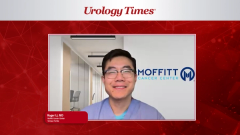
Roger Li, MD, addresses the open questions surrounding adjuvant therapy after cystectomy, the urologist's role in recognizing treatment-related toxicities, and why multidisciplinary referral is the change most likely to deliver the full benefit of perioperative therapy.
Advertisement
In this video, Roger Li, MD, discusses what happens after cystectomy and what it will take for patients to receive the full benefit of perioperative therapy.
Li says many questions about the adjuvant phase remain outstanding and are the focus of ongoing research. Enfortumab vedotin-ejfv (Padcev) carries substantial toxicity, particularly with long-term use, and for a patient who has achieved a pCR and converted to negative ctDNA, he says the open question is whether any adjuvant treatment is needed, let alone a combination as toxic as enfortumab vedotin plus pembrolizumab (Keytruda). He views VOLGA (NCT04960709) as a critical step toward an answer, and says these questions should be resolved in clinical trials with patient safety as the top priority.
Although urologists have not traditionally delivered these drugs, Li argues they play just as important a role as medical oncologists in recognizing toxicities. As surgeons, he notes, they are the only ones who can determine whether it is safe to proceed to surgery given lingering complications. He encourages urologists to learn to recognize these toxicities, draw on medical oncologists' experience, and act as a team.
On using ctDNA or pathologic response to tailor adjuvant therapy, Li cautions that differences in regimens, ctDNA patterns, and testing time points across trials mean the current evidence is not yet definitive. Until it is, he recommends staying as close as possible to the regimens as tested.
Asked for the single most important change, Li points to multidisciplinary care. Moffitt has followed that model for years, he says, but many community urologists still take patients to upfront cystectomy. Although earlier evidence suggested radical cystectomy alone could cure some patients, the improved outcomes from these trials mean it “behooves all of us” to refer patients to medical oncology for neoadjuvant treatment before surgery.
Advertisement
Related to this article
The final analysis confirmed PFS and response benefits in previously treated advanced clear cell renal cell carcinoma, but the OS difference did not cross the prespecified significance boundary.

Chad Ritch, MD, discusses how PSMA-PET informs patient management across different stages of the prostate cancer journey.
Topline results are expected in November 2026 ahead of a planned sBLA submission.
Alicia K. Morgans, MD, MPH, reviews promising prostate cancer findings from ESMO 2026,
A comprehensive guide to the top data in genitourinary oncology presented at ESMO 2026.
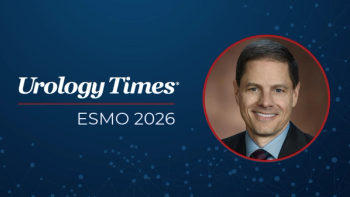
Brian I. Rini, MD, FASCO, explains why LITESPARK-012’s negative triplet results still offer lessons on drug delivery and building on first-line RCC doublets.
Topline results from the study are anticipated in the first half of 2027.
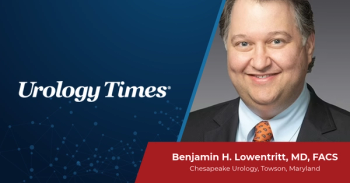
The 2026 LUGPA Annual Meeting will tackle policy, artificial intelligence, and practice growth, according to Benjamin H. Lowentritt, MD, FACS.
Advertisement
Advertisement
Trending on Urology Times
1
Alicia Morgans, MD, MPH, highlights key prostate cancer data from ESMO 2026
2
LITESPARK-012: Lessons from a negative phase 3 trial in first-line RCC
3
ESMO 2026 recap: Notable updates across genitourinary oncology
4
Adding darolutamide to ADT and radiation improves MFS in very high-risk localized prostate cancer
5