
Opinion|Videos|October 6, 2026
GI Toxicity Reduction: What the Data Mean for Patients
Author(s)Martin T. King, MD, PhD
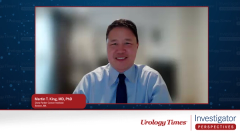
Martin T. King, MD, PhD, unpacks why fewer grade 2 or higher GI events with rectal spacing can mean fewer colonoscopies, less rectal bleeding, and meaningful quality-of-life gains for patients weighing their radiation options.
Advertisement
Episodes in this series
In this segment, Martin T. King, MD, PhD turns to what the toxicity findings suggest clinically. Despite high-quality treatment delivered to all patients in the trial, the spacer arm had no late GI events compared with 6 in the control arm.1 He explains that this points to a real reduction in the risk of acute or late grade 2 or higher GI toxicity, including proctitis, rectal bleeding, rectal pressure, and rectal pain, symptoms he notes can meaningfully affect patients' quality of life and sometimes lead to additional medical interventions. For patients who want to minimize this risk, he says a rectal spacer is worth considering.
Asked which toxicity endpoints he finds most compelling, King returns to grade 2 or higher GI toxicity, specifically proctitis, diarrhea, and rectal bleeding, because these can require active management such as colonoscopy or argon laser coagulation. He notes that patients who experience these symptoms often describe real difficulty managing the associated pain and pressure, which is part of why he views this end point as clinically important.
He then reflects on how meaningful these reductions are in day-to-day care and long-term quality of life. He believes the benefit is especially relevant for patients at higher risk of GI toxicity after radiation and for those who already experience these symptoms. More broadly, he points out that patients considering treatment for prostate cancer face several options, including observation, surgery, radiation, and focal therapy. In that context, he sees rectal spacing as one additional tool that can help address patients' concerns about GI toxicity when they are weighing radiation therapy, particularly for those with clinically significant prostate cancer.
In the next episode, "Rectal Spacers in Modern, Image-Guided Radiotherapy," King steps back to consider how rectal spacing fits into the broader arc of prostate radiotherapy's technical advances, and where it still adds value alongside intensity-modulated radiation therapy and image guidance.
REFERENCE
1. King MT, Chao M, Svatos M, et al. Prospective randomized controlled trial of hyaluronic acid spacer for hypofractionated prostate radiation therapy: 3-year results (NCT04189913). Presented at: 2026 European Society for Radiotherapy and Oncology Congress. May 15-19, 2026. Stockholm, Sweden. Abstract 3623
Advertisement
Related to this article

Andrea Necchi, MD, discusses how results from the CA017-078 trials compares with other perioperative immunotherapy trials in muscle-invasive bladder cancer.
In TALAPRO-3, talazoparib plus enzalutamide improved rPFS vs placebo plus enzalutamide (HR, 0.48; P < .0001) in HRR-mutated mAPMN/S prostate cancer.

Final phase 3 CA017-078 data show perioperative nivolumab plus GC did not significantly improve pCR (39.1% vs 29.6%) or EFS (HR, 0.94) vs GC alone in MIBC.

Daniel Heng, MD, discusses final LITESPARK-011 results, including sustained PFS benefit with belzutifan plus lenvatinib vs cabozantinib in advanced ccRCC.
In the randomized phase 2 PE-PE trial, median relapse-free survival was 25.4 months with pembrolizumab plus surgery or SABR vs 11.0 months with local therapy alone.

Interim phase 3 data show a 58% reduction in the risk of metastasis or death with the addition of darolutamide to ADT + radiation.

Carlos A. Vargas, MD, discusses updated survival outcomes, safety, and the mechanism of SYNC-T SV-102, an investigational in situ immunotherapy for metastatic prostate cancer.

Perioperative durvalumab (Imfinzi) plus neoadjuvant enfortumab vedotin-ejfv (Padcev) cut the risk of EFS events by 49% and death by 42% in cisplatin-ineligible MIBC.
Advertisement
Advertisement
Trending on Urology Times
1
Adding darolutamide to ADT and radiation improves MFS in very high-risk localized prostate cancer
2
PROTEUS Substudy: Perioperative apalutamide plus ADT improves EFS vs surgery alone
3
Talazoparib/enzalutamide approved for HRR-mutated mAPMN/S prostate cancer
4
In situ immunotherapy shows encouraging survival findings in prostate cancer
5