

Opinion|Videos|August 19, 2026
Managing Immune-Related Adverse Events With Durvalumab Plus BCG in NMIBC
Author(s)Neal D. Shore, MD, FACS, Chandler Park, MD
Chandler Park, MD, and Neal D. Shore, MD, FACS, trace immune-related adverse events from melanoma's early days to today's playbook for community urology.
Advertisement
Episodes in this series
In this video, Chandler Park, MD, calls the disease-free survival data from POTOMAC (NCT03528694) dramatic, noting the study's size (a large, open-label phase 3 trial of more than 1000 patients) and a 32% relative risk reduction, and stresses what the trial reinforced: how important full BCG maintenance is to the regimen's benefit. Turning to safety, he explains that durvalumab's (Imfinzi) PD-L1 blockade tends to carry somewhat less toxicity than PD-1 blockade, citing hypothyroidism (around 10%), hepatitis, and rash (around 3%) as among the most common adverse events, although he suggests urology practices may need added education for staff unfamiliar with immune checkpoint inhibitors.
Neal D. Shore, MD, FACS, builds on that, noting that approximately 15% of patients experience grade 3/4 immune-related events, with the large majority being grade 1/2: thyroid dysfunction, transient lab abnormalities, fatigue, gastrointestinal toxicity, and rash. He describes ongoing debate among urologic colleagues at recent conferences over whether the benefit outweighs the risk, and argues the answer lies in building a true multidisciplinary team rather than deciding alone. He says he has moved away from a paternalistic approach toward full shared decision-making, pointing out that immune-related adverse events are already routinely managed across more than 20 approved solid-tumor indications.
Park shares a personal parallel: 15 years ago, working with John M. Kirkwood, MD, at the University of Pittsburgh before immunotherapy was mainstream in melanoma, no medical oncologists initially knew how to manage these toxicities either, until advanced practice providers (APPs) stepped in within a few years. Both physicians agree that a shortage of medical oncologists and urologists means APPs can, and should, be trained to help manage these events. Shore closes by tying this to the broader access challenge posed by an aging, comorbid patient population, referencing his work with the Bladder Cancer Advocacy Network.
In the next episode, "POTOMAC Subgroup Data: Cystectomy Risk and Rare Adverse Events in NMIBC," Shore returns with fresh American Urological Association data on time to cystectomy, subgroup findings, and early overall survival trends that add even more weight to the case for durvalumab plus BCG.
Advertisement
Related to this article

Interim phase 3 data show a 58% reduction in the risk of metastasis or death with the addition of darolutamide to ADT + radiation.

Carlos A. Vargas, MD, discusses updated survival outcomes, safety, and the mechanism of SYNC-T SV-102, an investigational in situ immunotherapy for metastatic prostate cancer.

Perioperative durvalumab (Imfinzi) plus neoadjuvant enfortumab vedotin-ejfv (Padcev) cut the risk of EFS events by 49% and death by 42% in cisplatin-ineligible MIBC.

The PROTEUS substudy addresses a key limitation of the main study, which had no surgery-alone control arm.

At a median follow-up of 60.9 months, median EFS was 74.1 months in the pembrolizumab arm and not reached in the placebo arm.
The phase 1/2 CELC-G-201 study found preliminary antitumor activity and manageable toxicity with gedatolisib plus darolutamide in metastatic castration-resistant prostate cancer.
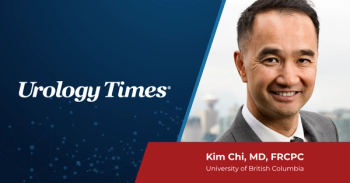
Kim Chi, MD, FRCPC, discusses the rationale and design of the phase 3 KLK2-comPAS trial evaluating pasritamig alone and in combination with JNJ-9401 in patients with mCRPC.

Longer-term findings from the phase 2 ARACOG study suggest differences in objectively measured cognitive function between ARPIs.
Advertisement
Advertisement
Trending on Urology Times
1
Adding darolutamide to ADT and radiation improves MFS in very high-risk localized prostate cancer
2
VOLGA: Durvalumab plus enfortumab vedotin improves EFS, OS in MIBC
3
PROTEUS Substudy: Perioperative apalutamide plus ADT improves EFS vs surgery alone
4
In situ immunotherapy shows encouraging survival findings in prostate cancer
5