
Opinion|Videos|February 18, 2025
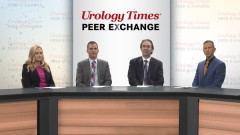
Navigating The Future of NMIBC Trails: Key Insights and Takeaways
Experts conclude their discussion on non-muscle invasive bladder cancer (NMIBC) highlighting practice considerations for today and the future.
Advertisement
Episodes in this series
Advertisement
Related to this article

Engy Habashy, MD, discusses key takeaways from the 2025 AUA GSM guideline, including the role of androgens and hormonal therapies in managing genitourinary syndrome of menopause.

Chad R. Ritch, MD, MBA, FACS, discusses how PSMA-PET informs staging, treatment planning, recurrence workup, and the interpretation of equivocal findings.

Michael S. Cookson, MD, MMHC, FACS, discusses how Anktiva’s expanded FDA approval may broaden bladder-preserving treatment options for BCG-unresponsive papillary-only NMIBC.

Jeffrey M. Spier, MD, discusses how fatigue may impact patient quality-of-life and when dose reduction may be an appropriate treatment strategy.

This approval expands the perioperative use of pembrolizumab plus enfortumab vedotin to all patients with MIBC, regardless of cisplatin eligibility.

Take a look through some of the notable data presentations at this year's ESMO Congress.

The investigational HIF-2α inhibitor casdatifan demonstrated antitumor activity as monotherapy and in combination regimens across the ARC-20 platform study.
The agency issued a PDUFA target action date of June 14, 2027.
Advertisement
Advertisement
Trending on Urology Times
1
Michael Cookson, MD, reacts to Anktiva’s expanded approval in NMIBC
2
European Commission approves perioperative pembrolizumab plus enfortumab vedotin for MIBC
3
FDA accepts new drug application for UGN-103 in recurrent LG-IR-NMIBC
4
ESMO 2026: Key presentations across genitourinary oncology
5