Now Playing
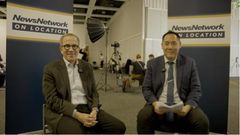
Chandler Park, MD, MSc, FACP, interviews urologist Neal D. Shore, MD, FACS, on the top updates in prostate cancer and bladder cancer at the 2025 European Society for Medical Oncology Congress.
At the 2025 European Society for Medical Oncology Congress in Berlin, Chandler Park, MD, MSc, FACP, interviewed Neal D. Shore, MD, FACS, about major advances in prostate and bladder cancer research.
Shore began by discussing the landmark EMBARK trial, an 11-year global study evaluating enzalutamide (Xtandi) with or without LHRH therapy in patients with biochemical recurrence (BCR) after surgery or radiation. The study demonstrated significant improvements in metastasis-free and overall survival, with a hazard ratio of 0.595 for combination therapy over monotherapy—results published in the New England Journal of Medicine. He highlighted patient-centered features such as treatment holidays after prostate-specific antigen nadir and emphasized shared decision-making based on adverse event profiles.
Park and Shore noted that enzalutamide now has proven benefit across all stages of prostate cancer—from non-metastatic to metastatic hormone-sensitive disease—supported by multiple phase 3 trials and 7 NEJM publications. Shore also discussed emerging precision medicine approaches, including PTEN-deficient disease from the CAPItello-281 trial (testing an AKT inhibitor) and PSMAddition, a positive trial combining lutetium-177 PSMA with androgen deprivation therapy and androgen receptor pathway inhibitors. Shore underscored the importance of germline and somatic testing (BRCA1/2, HRR, PTEN) and the trend toward personalized, targeted therapy.
The discussion then turned to bladder cancer, where Shore outlined transformative results from the NIAGARA and KEYNOTE-905 trials integrating immunotherapy (durvalumab [Imfinzi] or pembrolizumab [Keytruda]) into perioperative regimens, showing substantial survival gains even in cisplatin-ineligible patients. In non–muscle invasive bladder cancer, the CREST and POTOMAC trials combining BCG with checkpoint inhibitors significantly improved event-free survival, marking another major step forward.
Both physicians concluded by emphasizing collaboration between urologists and oncologists, the move toward bladder-sparing and personalized treatments, and a shared commitment to advancing patient-centered cancer care through global research cooperation.