





Hormone Therapy
Latest News

Advertisement
Latest Videos






Podcasts


Advertisement
More News

The pivotal trial supporting approval of the oral testosterone undecanoate was Study 16-002, which included 95 hypogonadal males.

"We didn't see any clinically significant changes on the prostate gland, which is very important for the urologists who see people who have prostate cancer or prostate enlargement," says Ronald Swerdloff, MD.

Researchers from the FDA’s Center for Drug Evaluation and Research determined that the benefits of androgen receptor inhibitors outweighed the risks in men aged ≥80 years with nonmetastatic castration-resistant prostate cancer.

"Early data suggest that low testosterone levels increase the risk of developing severe disease and that testosterone supplementation may provide benefit for men who are infected by the SARS-CoV-2 virus," says Mohit Khera, MD, MBA, MPH.

Researchers suggest diet may play important role in male reproductive health.
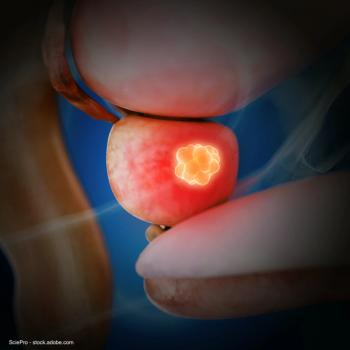
Many factors play into decision-making process when weighing agents.

The new treatment is a ready-to-use 6-month subcutaneous depot formulation of leuprolide mesylate.
The TAVT-45 formulation of abiraterone acetate consists of granules for oral suspension.
In contrast, following development of metastatic castration-resistant prostate cancer, time to castration resistance did not influence overall survival.
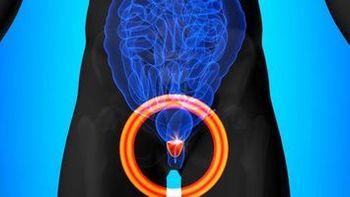
The approval was based on data from the phase 3 ARCHES trial.

The novel combination of apalutamide plus abiraterone and prednisone had previously met the primary end point of radiographic progression-free survival in the phase 3 ACIS trial.

The genetic alterations in circulating tumor cells were linked to response or resistance to abiraterone acetate and enzalutamide.

The application for the investigational testosterone replacement therapy is supported by findings from the pivotal phase 3 ReTUNE trial, as well as a 6-month extension study of that trial.

The decline in total testosterone was observed even among men with normal body mass index.

"The rigorous study and promising clinical availability of oral therapy for testosterone deficiency are flash points in the current era, in which the utility of testosterone therapy is under critical review," writes Arthur L. Burnett II, MD, MBA.

Neither oral nor gel testosterones show significant effect on liver function test results.

The treatment improves markers of nonalcoholic fatty liver disease, an investigator reports.
Advertisement
Advertisement
Trending on Urology Times
1
FDA grants RMAT designation to EG110A for neurogenic detrusor overactivity
2
FAQs: The 2026 AUA Guideline on Medical Management of Kidney Stones
3
PSMA-PET in clinical practice: Juan Gómez Rivas, MD, on barriers to access
4
CHMP recommends perioperative enfortumab vedotin plus pembrolizumab for MIBC
5