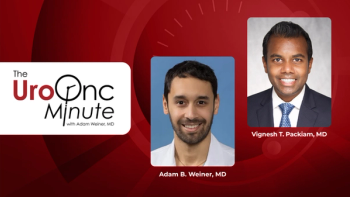
Vignesh Packiam, MD, discusses strategies to manage intravesical therapy toxicity in NMIBC, improve treatment tolerability, and preserve bladder function.

Ibrahim explains the unique challenges men face after spinal cord injury, including neurogenic erectile dysfunction, ejaculatory dysfunction, and particularly the distinctive sperm abnormalities seen in this population.
In this episode of Pearls & Perspectives, host Amy Pearlman, MD, sits down with Emad Ibrahim, MD, HCLD, associate professor of Urology & Neurological Surgery, director of the Clinical Andrology Laboratory, and director of the Male Fertility Research Program of The Miami Project to Cure Paralysis. With over 20 years of experience, Ibrahim offers an unparalleled look into the intersection of male fertility, sexual health, and spinal cord injury—an area where few clinicians have specialized training.
Ibrahim explains the unique challenges men face after spinal cord injury, including neurogenic erectile dysfunction, ejaculatory dysfunction, and particularly the distinctive sperm abnormalities seen in this population (high counts but low motility/viability). He walks through the stepwise approach used in his program—from specialized vibratory stimulation devices to office-based electroejaculation—highlighting how these techniques can reliably produce ejaculates for fertility use without the need for surgery.
A major portion of the conversation centers on his cutting-edge research, including a $3.25M Department of Defense grant studying probenecid as a treatment to reduce inflammasome-driven sperm dysfunction in spinal-cord-injured men. He also discusses the difficulty of recruiting patients for double-blind trials and the promise this work holds for transforming future care.
The episode also dives into:
• how spinal cord injury affects sexual function differently in men vs women
• practical guidance for primary care and urology clinicians on counseling these patients
• the use of vibratory devices (including the Ferticare and Viberect Pro)
• the role of electroejaculation and how few providers are trained to perform it
• cryopreservation workflows, including infectious disease requirements and coordination with IVF centers
• the impact of lifestyle factors like heat exposure
• counseling men on testosterone therapy, vasectomy, and age-related fertility
• why in-lab semen analysis is far more reliable than at-home testing
• the future of reproductive medicine, including prepubertal testicular tissue preservation.
Ibrahim emphasizes the importance of awareness: many men with spinal cord injury are never told that fertility and sexual function support is available. His program is designed not just to provide options—but to provide hope.