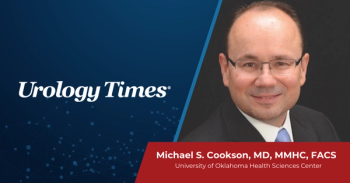
Michael S. Cookson, MD, MMHC, FACS, discusses how Anktiva’s expanded FDA approval may broaden bladder-preserving treatment options for BCG-unresponsive papillary-only NMIBC.
The combination demonstrated a disease-specific survival rate of 98.7% at 12 months and 96.0% at 36 months.
Data published in the Journal of Urology support the long-term duration of effect of nogapendekin alfa inbakicept-pmln (NAI; Anktiva) plus BCG in patients with BCG-unresponsive high-grade papillary-only non-muscle invasive bladder cancer (NMIBC).1
The findings, collected from cohort B of the pivotal phase 2/3 QUILT-3.032 study (NCT03022825), showed encouraging disease-specific survival (DSS), long-term progression-free survival (PFS), and high cystectomy avoidance at 36-month follow-up in this patient population.
“Patients with BCG-unresponsive papillary-only non-muscle invasive bladder cancer have few treatment options, with cystectomy being considered the definitive treatment,” said lead author Sam S. Chang, MD, MBA, professor of urology and Chief Surgical Officer of the Vanderbilt Ingram Cancer Center, Nashville, Tennessee, in a news release on the findings.2 “Prolongation of progression-free survival, disease-specific free survival, and avoidance of bladder removal are clinically meaningful goals of next-generation chemotherapy-free immunotherapy. Our findings provide evidence that ANKTIVA plus BCG would offer a novel and efficacious treatment option for these patients.”
In total, the analysis included 80 patients with histologically confirmed BCG-unresponsive high-grade Ta/T1 papillary NMIBC. Patients received intravesical NAI plus BCG for 6 weeks. The primary end point was disease-free survival (DFS) at 12 months. Secondary end points included DSS, PFS, cystectomy avoidance, and safety.
Overall, data showed a DFS rate of 58.2% (95% CI, 46.6 to 68.2) at 12 months. At 24- and 36-months, DFS rates were 52.1% (95% CI, 40.3 to 62.7) and 38.2% (95% CI, 25.6 to 50.6), respectively.
On the trial’s key secondary end points, the combination demonstrated a DSS rate of 98.7% (95% CI: 91.4, 99.8) at 12 months and 96.0% (95% CI: 88.2, 98.7) at 36 months. At the time of data report, the median DSS had not been reached.
Additionally, results showed PFS rates of 94.9% (95% CI, 86.9 to 98.0) at 12 months and 83.1% (95% CI, 69.5 to 91.0) at 36 months. Cystectomy-avoidance rates were 92.2% (95% CI, 83.4 to 96.4) at 12 months and 81.8% (95% CI, 68.1 to 90.1) at 36 months. The median time to cystectomy had not been reached at the time of data report.
“The 12- and 36-month rates for disease-free, progression-free, and disease-specific survival seen in this study are higher than those reported for other investigational therapies in this patient population,” noted Patrick Soon-Shiong, MD, Founder, Executive Chairman, and Global Chief Scientific and Medical Officer of ImmunityBio, in the news release.2 “Together with the high rates of cystectomy avoidance, with the median to cystectomy not yet reached, and the 96% bladder cancer-specific survival at 3 years, also with median not yet reached, demonstrates the effectiveness of ANKTIVA in enhancing the immune response. These findings point to a potential paradigm change in the treatment of BCG-unresponsive high-grade papillary-only NMIBC.”
The combination was also well-tolerated, with a safety profile consistent of that with BCG alone. Overall, safety data was assessed across both cohort B (n = 80) and cohort A (n = 100) in the trial. Among all patients, 61% reported grade 1 or 2 treatment-related adverse events (TRAEs) and 3% reported grade 3 TRAEs. No grade 4 or 5 events were reported. The most common TRAEs (3% or higher) among those who received NAI plus BCG (n = 180) included dysuria, pollakiuria, and hematuria, which ImmunityBio noted are expected for intravesical instillation of BCG.2
NAI is currently approved in the US in combination with BCG for the treatment of patients with BCG-unresponsive NMIBC with carcinoma in situ (CIS) with or without papillary tumors. The combination has also received approval in the UK, as well as conditional marketing authorization in the European Union.
Soon-Shiong concluded, “The evidence that CIS and papillary disease are clonally linked, combined with the QUILT-3.032 findings showing long-term cystectomy avoidance, sustained avoidance of progression to muscle-invasive disease, and 96% bladder cancer-specific survival at 3 years, supports the consideration that ANKTIVA plus BCG addresses the unmet need for patients with papillary disease alone who face the prospect of total radical cystectomy following failure of BCG therapy.”
REFERENCES
1. Chang SS, Chamie K, Kramolowsky E, et al. Prolonged progression-free survival, disease-free survival, and cystectomy avoidance with IL-15 receptor lymphocyte-stimulating agent NAI plus bacillus calmette-guérin in bacillus calmette-guérin-unresponsive papillary-only nonmuscle-invasive bladder cancer. J Urol. 2026;215(1):44-56. doi:10.1097/JU.0000000000004782
2. ANKTIVA® with BCG demonstrates 96% survival from bladder cancer at three tears with median survival not yet reached in BCG-unresponsive high-grade papillary-only non-muscle invasive bladder cancer. News release. ImmunityBio. December 16, 2025. Accessed December 16, 2025.