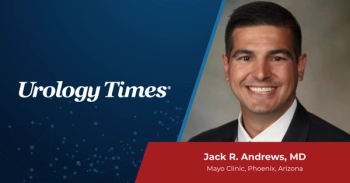
Jack R. Andrews, MD, discusses BED-PSMA-411 findings comparing PSMA-PET detection rates and urinary excretion in prostate cancer biochemical recurrence.
Juan J. Andino, MD, MBA, discusses surgical decision-making in prolonged ischemic priapism and how ischemia duration affects erectile dysfunction risk and treatment timing.
In this video, recorded at the
Andino notes that prolonged ischemic priapism presents complex management decisions when less invasive interventions fail or patients delay seeking care. At this stage, surgical treatment may be necessary to achieve detumescence and address the risk of lasting sexual dysfunction. Andino explains that these cases often require input from specialists, particularly when patients present after approximately 20 to 24 hours of ischemia.
The duration of ischemia is a key factor in determining the approach to treatment and assessing the potential for long-term erectile dysfunction, he explains. Andino discusses findings from a retrospective analysis of 186 priapism cases treated at a single high-volume institution between 2015 and 2024.1 Ischemic priapism duration was the strongest predictor of newly diagnosed erectile dysfunction, with episodes lasting more than 36 hours associated with a substantially increased risk (OR, 61.3; P < .001). Episodes lasting more than 20 hours were also associated with increased risk (OR, 25.2; P = .007), supporting consideration of a lower threshold for identifying prolonged ischemic priapism than the 24-hour cutoff historically used in guidelines.
“I do think that we're seeing from the data and from the evidence that even at 20 hours, there can be pretty significant and permanent long-term damage,” Andino emphasized.
As the evidence evolves, a lower threshold for identifying prolonged ischemic priapism may help inform clinical decision-making and patient counseling.
REFERENCE
1. Borrell JA, Bettencourt A, Furtado TP, et al. Risk factors, diagnosis, and long-term erectile dysfunction outcomes in priapism: a retrospective analysis of 186 cases from a single institution. Int J Impot Res. 2026;38(1):23-29. doi:10.1038/s41443-025-01076-9