
"This is really going to make access to care a lot better, and workflow is going to be a lot easier," says Ben H. Chew, MD, MSc, FRCSC.
"This is really going to make access to care a lot better, and workflow is going to be a lot easier," says Ben H. Chew, MD, MSc, FRCSC.
Break Wave lithotripsy's real-time ultrasound visualization of cavitation and its low-energy resonant frequency delivery mechanistically reduce the risk of renal hematoma and arrhythmia seen with conventional shock wave lithotripsy, while the boundaries of stone size, Hounsfield unit thresholds, and patient anatomy eligible for treatment remain to be defined in commercial practice, according to Ben H. Chew, MD, MSc, FRCSC.
Break Wave lithotripsy met all pivotal noninferiority end points vs shock wave lithotripsy.

According to Chew, Break Wave lithotripsy is best suited to renal and ureterovesical junction stones, where ultrasound visualization is most reliable.
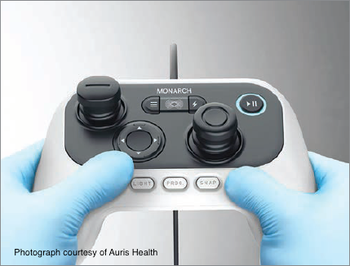
Advances in robotic URS will help target stones and reduce ionizing radiation.
January 21st 2020