

The phase 3 BiPASS trial is assessing earlier use of 68Ga-PSMA-PET imaging in the pre-biopsy setting.
The phase 3 BiPASS trial is assessing earlier use of 68Ga-PSMA-PET imaging in the pre-biopsy setting.

Enrollment in the ongoing pivotal QUILT-2.005 trial has now reached 85%.

The Safety Review Committee has recommended that the trial proceed with the cohort expansion phase with no modifications to the protocol.

The next step is to prospectively validate the model in real-world clinical settings or within ongoing clinical trials.
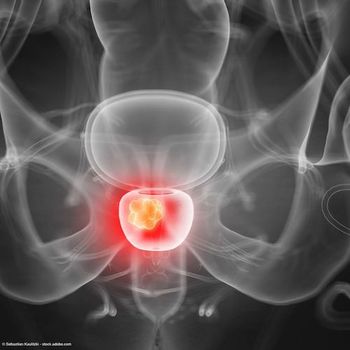
Image-guided radiotherapy with reduced target margins may improve some dosimetric parameters and patient-reported urinary symptoms.

The ARTISAN trial includes both 177Lu-PSMA naïve and 177Lu-PSMA experienced cohorts.

The phase 2 study is looking to evaluate nadofaragene firadenovec in combination with the investigational light-activated small molecule TLD-1433 (Ruvidar).

Treatment failure occurred in 46% of patients in the high-risk group vs 21% of patients in the low-risk group.

The study is intended to support potential label expansion of testosterone undecanoate in men aged 65 to 80 years with hypogonadism.

Enolen is currently under investigation in a phase 1 trial to assess its safety and efficacy in delivering enzalutamide locally into the prostate.

The phase 2 PROHEAR trial is assessing the safety and efficacy of ACOU085 in preventing ototoxic hearing loss induced by cisplatin-based chemotherapy.

The results from this study are expected to support an application to the FDA for premarket approval of the Butterfly device.

2025 featured multiple advancements in women's health aimed at enhancing treatment options and awareness.

The study is being conducted as part of the landmark ProtecT trial.

The code, J9282, went into effect on January 1, 2026.

According to the authors, these findings support the early use of genomic testing to guide treatment decisions.

A recap of the FDA submissions and regulatory decisions in urology from December 2025.

As the year comes to a close, we revisit some of this year’s top content in female urology.

As the year comes to a close, we revisit some of this year’s top content in men's health.

As the year comes to a close, we revisit some of this year’s top content on bladder cancer.
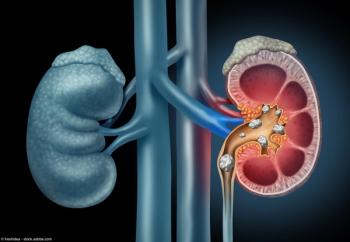
As the year comes to a close, we revisit some of this year’s top content on prostate cancer.
As the year comes to a close, we revisit some of this year’s top content on benign prostatic hyperplasia.

As the year comes to a close, we revisit some of this year’s top content on genomic testing.

As the year comes to a close, we revisit some of the top Urology Times podcast episodes from 2025.

As the year comes to a close, we revisit some of this year’s top content on prostate cancer.
The application is supported by results from the phase 3 PIVOT-PO trial.
The PROSTOX ultra test identifies men with localized prostate cancer who are at a higher risk of developing late GU toxicity from radiation, helping to inform treatment decisions.
The approval is supported by data from the TRITON3 trial.

Patients with GG1 disease and a high genomic classifier score had a significantly higher risk of disease progression.

The combination yielded significant improvements in event-free survival, overall survival, and pathologic complete response rates vs neoadjuvant chemotherapy.