
Combined treatment with nivolumab (Opdivo), 1 mg/kg and ipilimumab (Yervoy), 3 mg/kg resulted in a 38% overall response rate in a study of platinum-pretreated metastatic urothelial cancer patients.
Combined treatment with nivolumab (Opdivo), 1 mg/kg and ipilimumab (Yervoy), 3 mg/kg resulted in a 38% overall response rate in a study of platinum-pretreated metastatic urothelial cancer patients.

Urologists should be open minded that more people are turning to the Internet for health care advice or services and should consider reaching patients where they live and work by implementing telemedicine, when it makes sense, or in their own online communications, according to Aaron Spitz, MD, of Orange County Urology Associates in California.

Novel sites catering to men emerge, along with conflicting views about Internet-based care.
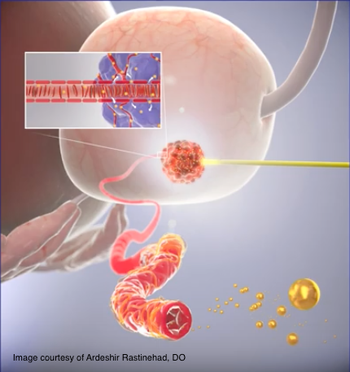
A new technique using gold-silica nanoparticles to perform ultrafocal photothermal ablation of prostate cancer tumors seems feasible, safe, and relatively free of serious complications for men with low- or intermediate-risk localized prostate cancer.

New evidence supports using hormone therapy with salvage radiation therapy after radical prostatectomy, according to a recent amendment to the American Society for Radiation Oncology/AUA joint clinical guideline on adjuvant and salvage radiotherapy after prostatectomy.

“Our finding that about a third of patients had some evidence of spermatogenesis in the testes at the time of bilateral simple orchiectomy indicates that there is at least some fertility potential in these patients," says Tristan Nicholson, MD, PhD.
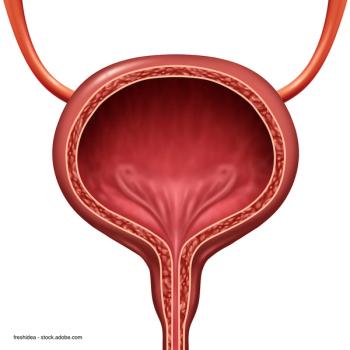
Treatment combining the immunotherapy atezolizumab (Tecentriq) and platinum-based chemotherapy significantly improved progression-free survival in patients with previously untreated locally advanced or metastatic urothelial carcinoma compared to chemotherapy alone.

The magnetic resonance imaging pathway is the most accurate diagnostic strategy for detecting clinically significant prostate cancer, according to a recent literature review.

Researchers have identified a urine biomarker that noninvasively helps detect aggressive prostate cancer about as accurately as tissue-based prognostic markers, according to a recent study.

Low-intensity extracorporeal shock wave therapy is a safe treatment for men with erectile dysfunction and might work to improve, or even cure, ED in some patients. But there remain important unanswered questions, including which patients are ideal candidates and which protocol and devices are best.

The novel antibody-drug conjugate enfortumab vedotin produced an impressive 44% response rate in a phase II trial of urothelial cancer patients who had been treated with standard chemotherapy and a checkpoint inhibitor.

Smoking’s strong impact on bladder cancer risk among men and women is clear, but a new study shows quitting smoking can greatly reduce risk of the cancer among menopausal women.

Few physicians will argue that prior authorization is an administrative headache. Now, however, there are mounting data showing that prior authorization does more harm than good.

David J. Zetter, Jonathan Rubenstein, MD, and Mark Painter share their advice.

Urology practices are among the health care entities accused of violating the False Claims Act in recent years. And they’ve paid the price.

Experts say private equity can mean big benefits to large urology groups and solo urologists alike. But the real impact of these partnerships on urologists, their patients, and health care in general remains unknown.

These tips, fixes, and workarounds can ease urologists’ EHR-related frustrations.
Minimally invasive surgical options took front and center in 2018 when the AUA published its revised guideline on the surgical management of male lower urinary tract symptoms secondary to BPH.

Latin-American men are less likely than non-Latin-American Caucasian men to receive guideline-recommended definitive treatment for high-risk localized prostate cancer, according to a recent study.
Activating interferon stimulated gene factor 3 could be a new direction for treating clear cell renal cell carcinoma, according to a recent study.

Widowed bladder cancer patients are more likely to die from the disease than married patients, according to a recent study.
Patients at greatest risk of complications from opioids are older than 65 years, male, obese, have used opioids prior to surgery, or have elevated comorbidity index scores, according to Francis J. McGovern, MD.
Strong evidence has emerged in recent years suggesting opioid prescribers, including well-meaning urologists, have helped to fuel a national crisis and opioid addiction epidemic.
“There are a lot of patients in the greater St. Louis area that seek out my practice because I am a female practicing urology, and they want to see a female,” says Elizabeth Williams, MD.
Imaging with 18F fluciclovine PET/CT (Axumin) tomography identified sites of disease recurrence in a majority of prostate cancer patients with biochemical recurrence and led to changes in treatment course in 59% of men scanned.

In this Urology Times Q&A, Jessica Nelson, MPAS, PA-C, past president of the Urological Association of Physician Assistants, offers a physician assistant’s perspective on PAs performing urologic procedures, PA training, and more.

“This is more evidence that [dose-dense methotrexate, vinblastine, doxorubicin, and cisplatin] is highly effective for patients with bladder cancer,” says researcher Scott M. Gilbert, MD, MS.
A simple blood test, much like that used to detect tuberculosis, might identify as many as half of bladder cancer patients likely to fail intravesical bacillus Calmette-Guérin immunotherapy.
Men with AR-V7-positive prostate cancer seem to respond positively to a combination therapy with ipilimumab (Yervoy) and nivolumab (Opdivo).
Researchers studied data from a racially diverse cohort of 650 men undergoing a prostate biopsy between January 2007 and January 2018.