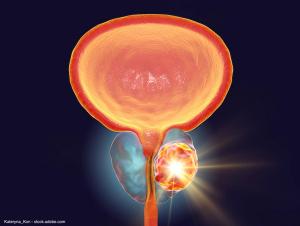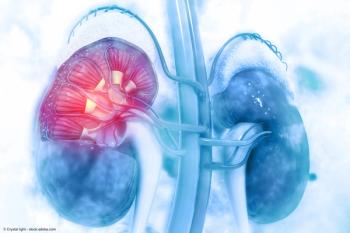
“Systemic therapy for RCC has changed very quickly. Every year, it's exciting to see that we're getting new developments, new drug approvals, and changes in the standard of care,” says Wenxin (Vincent) Xu, MD.
“Systemic therapy for RCC has changed very quickly. Every year, it's exciting to see that we're getting new developments, new drug approvals, and changes in the standard of care,” says Wenxin (Vincent) Xu, MD.

“HRR testing in patients before or at the time of mCRPC [diagnosis] would allow for olaparib therapy earlier in the disease course and potentially greater clinical benefit," wrote Daniel J. George, MD, and colleagues.

"All of our tools, including genomics and MRI, enable us to do a better job of risk stratifying [patients] to have a more appropriate shared decision-making discussion [about active surveillance]," explains David Morris, MD.
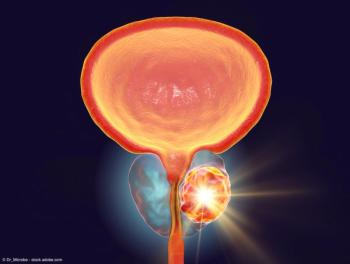
“One reason [the role of radiation has expanded] is the accuracy and precision of treatment, irrespective of a patient’s mutational profile. Radiation, irrespective of that heterogeneity and those mutations, has a high probability of killing those cancer cells,” said Daniel Spratt, MD.
The phase 2 study explored the investigational agent BXCL701 in combination with pembrolizumab in patients with small cell neuroendocrine prostate cancer.

Combination therapy with the novel agent BXCL701 and pembrolizumab showed strong clinical activity in in patients with platinum-resistant small cell neuroendocrine carcinoma metastatic castration-resistant prostate cancer.

Baseline findings showed that patients treated with first-line platinum-based chemotherapy prior to avelumab maintenance experienced a complete response rate of 13% and a partial response rate of 68% to chemotherapy.
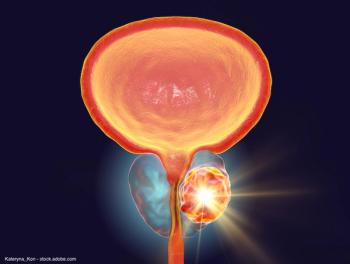
The utilization of sabizabulin in patients yielded significant and durable objective tumor responses, according to results of a phase 1b/2 trial (NCT03752099) presented at the 2022 AUA Annual Meeting.

Ziad Bakouny, MD, MSc, highlights efforts to gain an understanding of the biology and genomic drivers of the rare and aggressive form of kidney cancer.