






Bladder Cancer
Latest News
Advertisement
Latest Videos








CME Content


Advertisement
More News

Joshua J. Meeks, MD, PhD, highlights that collaboration between urologists and medical oncologists has become essential.

John Eifler, MD, highlights new real-world evidence on nadofaragene firadenovec-vncg for BCG-unresponsive NMIBC.

Suzanne B. Merrill, MD, FACS, discussed the feasibility of integrating immune checkpoint inhibitors into clinical practice for NMIBC, particularly in the community setting.

Safety outcomes were favorable: cystectomy-free survival was 94%, overall survival was 100%, and only 1 patient progressed to muscle-invasive disease.

Mobley also shares her treatment approach to BPH and explains the challenges of treating OAB.

"I'm very excited to bring this therapy to our patients in the Philadelphia area and to be able to offer it at MidLantic," says David Cahn, DO, MBS, FACOS.

"For me and the patients, [nadofaragene firadenovec is] a very convenient dosing schedule, and it's a very efficacious treatment," says Ravi D. Chauhan, MD, FACS.

Looking forward, Meeks said he sees nadofaragene firadenovec as a promising addition to the NMIBC treatment landscape.

Suzanne Merrill, MD, outlines recent progress with immunotherapy across NMIBC and MIBC.
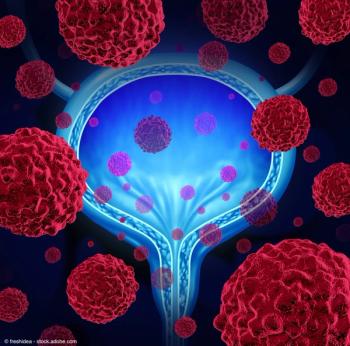
The FDA has confirmed that results from the UTOPIA trial can support submission of an NDA for UGN-103.

The study is assessing FL115 in combination with BCG in patients with non-muscle invasive bladder cancer.

Liu notes that current data—showing a response rate of just over 50%—indicate that the BCG-unresponsive CIS cohort is the most appropriate initial target population.

A recap of the FDA submissions and regulatory decisions in urology from October 2025.
Explore the evolving landscape of non-muscle invasive bladder cancer treatments, focusing on the promising gene therapy detalimogene voraplasmid and its trial results.

Petros Grivas, MD, PhD, touches on the signficance of KEYNOTE-905 data, which were presented at ESMO 2025.

Christof Vulsteke, MD, PhD, discusses results from the KEYNOTE-905 trial, evaluating perioperative EV/pembrolizumab in cisplatin-ineligible MIBC.

According to the authors, immune-mediated adverse events were manageable and consistent with the known profiles for ICIs.

Preliminary data from the study are promising.

The code, J9282, will be effective on January 1, 2026.
Three cycles of chemotherapy was shown to improve patient-reported outcomes vs six cycles, with no detriment to overall survival.

The findings revealed that patients prioritized improvements in overall survival and reductions in cancer recurrence at 5 years over all other treatment factors

The PDUFA target action date for the application is April 7, 2026.

Chan shares how her passion for research and desire to impact patients on a broader scale led her from academia to industry.
Advertisement
Advertisement
Trending on Urology Times
1
AI-generated profiles impersonate female urologists to market ED products online
2
Alternative BCG strains may help address ongoing supply challenges in NMIBC
3
Doublet or triplet? Urologists weighs in on mCSPC options
4
Pearls & Perspectives: Sexual Health and Intimacy in Midlife, With Karen Bigman, MBA
5