Advancing Long-Term Outcomes in BCG-Unresponsive NMIBC
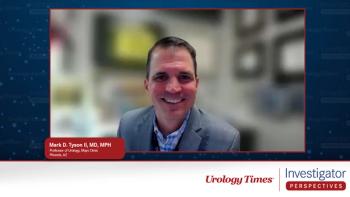
Mark D. Tyson II, MD, MPH, characterizes the clinical landscape for patients with BCG-unresponsive NMIBC, outlines the real-world barriers that make bladder-sparing approaches important despite cystectomy's guideline-preferred status, and describes the efficacy and durability benchmarks he applies when evaluating new bladder-preserving therapies.
Mark D. Tyson II, MD, MPH, explains the mechanism of action of cretostimogene grenadenorepvec, including its selective replication in Rb-E2F pathway–altered cancer cells and its dual activity via tumor cell lysis and GM-CSF–mediated immune amplification, and reviews the early clinical evidence that supported its FDA breakthrough therapy and fast track designations.
Mark D. Tyson II, MD, MPH, describes the design of the phase 3 BOND-003 trial, Cohort C, including the patient eligibility criteria, induction and maintenance dosing schedule, the clinical rationale and immunologic basis for allowing reinduction in patients with persistent disease at 3 months, and the definition and significance of the primary end point.
Mark D. Tyson II, MD, MPH, presents the efficacy results from BOND-003, Cohort C, including the 75.5% complete response rate at any time point, durability outcomes at 12 and 24 months, a median duration of response of 27.9 months, re-induction conversion data, and cystectomy-free survival rates of 89.2% and 81.3% at 12 and 24 months, respectively.
Mark D. Tyson II, MD, MPH, reviews the safety and tolerability profile of cretostimogene in BOND-003, including the absence of grade 3 or higher treatment-related adverse events, a 97% protocol completion rate, and the practical workflow considerations that would govern administration of cretostimogene in a urology practice if the agent receives FDA approval.
Mark D. Tyson II, MD, MPH, contextualizes the cretostimogene data within the broader BCG-unresponsive NMIBC treatment landscape, addresses the methodologic limitations of cross-trial comparison, discusses the heavily pretreated nature of the BOND-003 population, reviews his approach to treatment sequencing across available bladder-sparing options, and offers his central take-home message for urologists managing high-risk BCG-unresponsive disease.
