
Opinion|Videos|August 3, 2026
BOND-003 Cohort C: Study Design and Patient Population
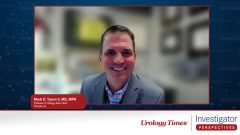
Author(s)Mark D. Tyson, MD, MPH
Fact checked by: Tracy Ann Politowicz
Mark D. Tyson II, MD, MPH, describes the design of the phase 3 BOND-003 trial, Cohort C, including the patient eligibility criteria, induction and maintenance dosing schedule, the clinical rationale and immunologic basis for allowing reinduction in patients with persistent disease at 3 months, and the definition and significance of the primary end point.
Advertisement
Episodes in this series
The phase 3 BOND-003 trial (NCT04452591) was designed as a single-arm, international study to evaluate the activity of intravesical cretostimogene grenadenorepvec in patients with high-risk BCG-unresponsive non-muscle invasive bladder cancer, with Cohort C focusing on patients with carcinoma in situ, with or without concomitant papillary Ta or T1 disease. In the third segment of this series, Mark D. Tyson II, MD, MPH, a professor of urology at Mayo Clinic in Phoenix, Arizona, reviews the study's design rationale, including the patient selection criteria, treatment schedule, and primary end point definition—each of which reflects both the regulatory guidance from the FDA and the biologic realities of immunotherapy in this disease setting.
All patients enrolled in Cohort C were required to meet the FDA's established definition of BCG unresponsiveness. Patients received a 6-week induction course of cretostimogene followed by maintenance dosing, and the protocol prospectively incorporated an option for reinduction in patients with persistent disease at 3 months. Tyson explains that this reinduction provision was not a concession to early failure but rather a deliberate design feature grounded in the biology of immune-mediated therapy: Unlike cytotoxic agents, for which a lack of early response is generally predictive of futility, immunotherapy may require repeated antigen exposure to shift from innate to adaptive immune activation. Data from BOND-003 confirmed the clinical value of this approach, with 50% of the 28 patients who underwent reinduction converting to a complete response.
The primary end point was centrally confirmed complete response rate at any time point—a definition that accounts for the possibility of delayed responses in patients who received reinduction. Tyson notes that a patient with persistent disease at 3 months who subsequently achieves a complete response after a second induction course is appropriately captured by this end point at 6 months rather than being classified as a nonresponder. This design aligns with FDA guidance for single-arm, open-label trials in a disease setting where randomization to cystectomy or placebo is not feasible, and it was designed to avoid penalizing an immunotherapy for the biologic delay sometimes inherent to its mechanism.
Advertisement
Related to this article

OpenFlo incorporates a design that modifies key mechanical features of conventional Foley catheters.

Study design discussions can help patients weigh personalized marketing claims, according to Jean Cunningham, PharmD, BCPS.
VIR-5500 is a PSMA-targeted PRO-XTEN dual-masked T-cell engager entering phase 3 development for prostate cancer.
Marie-Pier St-Laurent, MD, FRCSC, explains how NeoBLAST combines imaging, TURBT, and ctDNA to identify candidates for bladder-sparing surveillance.

Bladder symptoms during IVF often reflect hormonal and pelvic floor changes, not infection, according to Aleece Fosnight, MSPAS, PA-C.

A national survey found US hospitals expanded CAUTI prevention over 20 years, but use of key catheter-removal strategies remains variable.
Rezūm improved symptoms and quality of life at 1 year vs combination pharmacotherapy in sexually active men with BPO while preserving sexual function.

Sri Sivalingam, MD, discusses how suction-based technologies are improving stone clearance and raising expectations for ureteroscopic stone treatment.
Advertisement
Advertisement
Trending on Urology Times
1
FDA grants fast track designation to VIR-5500 for mCRPC
2
FDA grants 510(k) clearance to OpenFlo urinary catheter
3
How can urologists separate personalized medicine from marketing?
4
Why ctDNA serves as a rule-out in NeoBLAST's response assessment
5