
Opinion|Videos|August 3, 2026
BOND-003 Cohort C: Efficacy Results
Author(s)Mark D. Tyson, MD, MPH
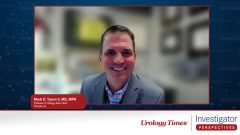
Mark D. Tyson II, MD, MPH, presents the efficacy results from BOND-003, Cohort C, including the 75.5% complete response rate at any time point, durability outcomes at 12 and 24 months, a median duration of response of 27.9 months, re-induction conversion data, and cystectomy-free survival rates of 89.2% and 81.3% at 12 and 24 months, respectively.
Advertisement
Episodes in this series
The efficacy results from BOND-003 (NCT04452591), Cohort C, demonstrated a complete response rate of 75.5% at any time point in patients with BCG-unresponsive carcinoma in situ (CIS)—a result that met the trial's primary end point with statistical significance (P < .001) against a 20% null hypothesis threshold and that Tyson describes as a compelling signal in one of the most difficult-to-treat settings in non–muscle-invasive bladder cancer (NMIBC). In the fourth segment of this series, Mark D. Tyson II, MD, MPH, a professor of urology at Mayo Clinic in Phoenix, Arizona, reviews not only the headline response rate but also the durability, re-induction, and cystectomy-free survival data that inform how he counsels patients about the realistic prospects of bladder preservation on this regimen.
Among patients who achieved a complete response, 64.2% remained disease free at 12 months and 60.1% at 24 months—a relative stability between the 1- and 2-year time points that Tyson finds clinically meaningful, as it suggests the responses observed in the early months were not artifacts of transurethral resection of bladder tumor (TURBT) or short-lived immunologic activity. He is careful to note, however, that these figures represent the proportion of initial responders who maintained their response at each landmark, not observed complete response rates in the intention-to-treat population—a distinction he considers important for appropriate cross-study interpretation. The median duration of response was 27.9 months and remains ongoing at the data cut-off, with 1 patient disease free beyond 51 months, suggesting a long-tail potential for durable responders. Tyson considers median duration of response the more clinically meaningful of the 2 regulatory end points, while expressing a preference for observed landmark complete response rates at 1 and 2 years in the intention-to-treat population as the most informative metric for counseling patients.
On re-induction, 14 of 28 patients with persistent disease at 3 months achieved a complete response following a second induction course, and 9 of those sustained that response over time—data that support a selective rather than reflexive approach to re-induction. Tyson describes his clinical threshold for re-induction as influenced by the burden and trajectory of disease: a patient with multifocal CIS who has been partially debulked with blue-light TURBT and shows mostly clean disease at 3 months with only a few areas of concern is a candidate for re-induction, whereas a patient who has progressed to T1 disease at 3 months is not. Cystectomy-free survival was 89.2% at 12 months and 81.3% at 24 months, and while Tyson acknowledges the limitations of this end point in small, nonrandomized trials, he notes that the majority of patients who ultimately underwent cystectomy after recurrence or progression had non–muscle-invasive or pT0 specimens—a finding he considers reassuring that the surgical window for curative intent was not sacrificed by the period of bladder-sparing therapy.
Advertisement
Related to this article

OpenFlo incorporates a design that modifies key mechanical features of conventional Foley catheters.

Study design discussions can help patients weigh personalized marketing claims, according to Jean Cunningham, PharmD, BCPS.
VIR-5500 is a PSMA-targeted PRO-XTEN dual-masked T-cell engager entering phase 3 development for prostate cancer.
Marie-Pier St-Laurent, MD, FRCSC, explains how NeoBLAST combines imaging, TURBT, and ctDNA to identify candidates for bladder-sparing surveillance.

Bladder symptoms during IVF often reflect hormonal and pelvic floor changes, not infection, according to Aleece Fosnight, MSPAS, PA-C.

A national survey found US hospitals expanded CAUTI prevention over 20 years, but use of key catheter-removal strategies remains variable.
Rezūm improved symptoms and quality of life at 1 year vs combination pharmacotherapy in sexually active men with BPO while preserving sexual function.
Sri Sivalingam, MD, discusses how suction-based technologies are improving stone clearance and raising expectations for ureteroscopic stone treatment.
Advertisement
Advertisement
Trending on Urology Times
1
FDA grants fast track designation to VIR-5500 for mCRPC
2
FDA grants 510(k) clearance to OpenFlo urinary catheter
3
How can urologists separate personalized medicine from marketing?
4
Why ctDNA serves as a rule-out in NeoBLAST's response assessment
5